Showing posts with label James Lees-Milne. Show all posts

Monday, February 06, 2012

"Frank Lloyd Wright will not hear a word against the sauerkraut," Or, People are strange

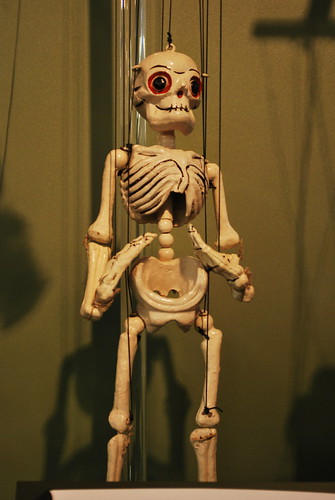
{Photo by rocketlass.} I make no bones about the fact that one of the things I look for in books, and particularly in nonfiction, is simple human oddity. Oh, sure, there are other things to be learned from reading about the lives of others--facts about other times and places, information about how others have grappled with problems or questions we may be facing ourselves--but at base, what I tend to be looking for is the entertainment afforded by the strange ways people behave.

And, having encountered a number of good examples lately, the time seems ripe for a roundup. Lariats away!

1 Will Friedwald's Biographical Guide to the Great Jazz and Pop Singers (2010) is such a jam-packed, endlessly fascinating book that it makes me wish that I had a similar guide to every field of culture that interests me. I suppose that Bill James's Historical Baseball Abstract (2000), if he would ever update it again, would almost suffice for baseball, while John Sutherland's Lives of the Novelists (2011) will do in a pinch for literature. But neither book makes the claim to completeness that Friedwald's guide does, nor does either offer nearly as much biographical information or critical analysis as Friedwald's book. It's a true joy, the product of decades of attending to vocalists, leavened with a distinct aesthetic and accompanying opinions, clearly stated but not intrusive.

And then there are the great lines, ranging from aphoristic descriptions (Tony Bennett is "the Pangloss of pop") to moments of insight, like "More than anyone else, Garland was Jolson's greatest heir." Though Bobby Short grew up in the Midwest and first became a star in Los Angeles, he nonetheless "embodied the Californinan's idea of New York elegance." "If there's such a thing as Anglo-Saxon soul," Jo Stafford's folk recordings are it. Chet Baker's singing
is, from the first note, utterly disarming. Yes, you can qualify a word like "disarming"--it may be true that either it is or it isn't, but some things are more disarming than others, and Baker's singing is one of them.
But I'm getting off topic! I was to focus on human oddity!

So you get this, from the part of the entry for Mary Martin that covers her time in Irving Berlin's Annie Get Your Gun:
It's been said that Martin is a more feminine Annie than Ethel Merman--which is kind of unfair. La Merm, blustery and brassy as she was, never struck me as butch. Could there be a more extreme way for a woman to prove her heterosexuality than to marry Ernest Borgnine?
Okay, so it's not exactly odd behavior: that wasn't really the reason Merman married Borgnine. But oh, the thought!

2 I've written about James Lees-Milne's charming biography Another Self (1970) before, but, prompted by a beautiful Slightly Foxed edition, I've been paging through it again. I think you'll enjoy this wonderfully bizarre portrait of an aged widow at Lees-Milne's boyhood church who served as bell-ringer:
Although really far too old and frail, Mrs Hartwell refused to relinquish the bell rope with its fluffy stripes in red, white and blue, called I believe the "sally." She regarded the pulling of it as her sacred duty, which she would surrender to no one, until the breath, as she put it, was out of her body. The act was sometimes attended by alarming manifestations. For bell ringing, even with one rope, necessitates a sense of rhythm in the ringer. Mrs Hartwell lacked this sense. Occasionally she would pull too soon, or too late. The rope thereupon gave a jerk and if she failed to let go--it was not in her nature to let go of things--she would be swept up the belfry. When this happened she would either cling to the rope until it came down again, or she would swing on it until her feet touched a ladder kept permanently fixed to the wall to enable workmen or builders to go up the tower. With astonishing agility for a person of her years she would scramble down the ladder and resume ringing as though nothing had happened.
The line that makes the picture is the aside, "it was not in her nature to let go of things."

3 For a fan of, a Michael Dirda once put it, "the higher gossip," Craig Brown's One on One (2011) is a great resource. Brown builds a daisy chain of 101 incidental meetings between prominent figures--most of them artists or writers, but also including religious figures, movie stars, and even Hitler--offering a brief, quote-rich account of A's meeting with B, followed by the same for B's meeting with C, C's meeting with D, and on. I'm about a third of the way through the book, and thus far the highlight, easily, is Evelyn Waugh's encounter with Alec Guinness, about which more sometime soon. Today, however, I'll share a bit from Frank Lloyd Wright's encounter with self-styled religious guru George Ivanovich Gurdjieff.

Gurdjieff doesn't come off well in either this account or the preceding one, which finds him meeting devotee P. L. Travers. In that entry, Brown writes about Gurdjieff's "unseemly" personal habits:
In his palatial flat at his institute in Paris, he often didn't bother to visit the lavatory, preferring to defecate willy-nilly. "There were times when I would have to use a ladder to clean the walls," recalls one of the residents."
The encounter with Wright is less disgusting, but only just. By invitation, Gurdjieff came to Taliesin, where he succeeded in roping in Wright within twenty-four hours; this famously stubborn and strong-willed man bowed to Gurdjieff in almost every realm. Including the kitchen:
Before his stay is over, he has made everyone cook great quantities of sauerkraut from his own recipe, involving whole apples, including their skins, their stem and their cores. Even his most devoted disciples find it hard to swallow. On his departure from Taliesin, he leaves behind two fifty-gallon barrels of the stuff. In the first flush of discipleship, Frank Lloyd Wright will not hear a word against the sauerkraut. He insists the barrels must be transported to his Fellowship's desert camp in Arizona, watching attentively as they are loaded onto a truck.
Wright's control only extends so far, however: somewhere in Iowa, the crew driving the truck dumps the barrels in a ditch.

4 The trip to Wright's kitchen serves nicely to bring us to the oddity that got me going on this theme today in the first place, a moment from Frank Brady's Endgame: Bobby Fischer's Remarkable Rise and Fall (2011). Twelve-year-old Bobby Fischer is watching a high-profile tournament, with all the Cold War trappings, between a US team and a Russian team. Brady writes,
And then there were the players, gathering onstage, waiting for the signal from the referee to take their places and commence their games. Soviet player David Bronstein asked for a glass of lemon juice--no, not lemonade, but real lemon juice, he insisted--which he downed in what looked like one gulp.
Surely he at least made a face?

US Open champion Donald Byrne, on the other hand,
said he was so on edge that he spent the entire day before the match trying not to think of chess, reading the romantic prose of Nathaniel Hawthorne.
Which seems like an error, no? Is anything quite black-and-white in Hawthorne?

Wednesday, September 08, 2010

James Lees-Milne

Michael Dirda’s piece from the Barnes and Noble Review in praise of the diaries of James Lees-Milne--which I wrote about briefly here--led me happily to Lees-Milne’s brief memoir, Another Self (1970). Described by Dirda as “hilarious, half-true, half-fantastic,” it is a wonderfully entertaining little book, full of stories of upper-class strangeness--especially involving Lees-Milne’s parents.

Lees-Milne’s father carries shades of the Mitford sisters’ father, Lord Redesdale: unpredictable, slightly tyrannical, and dismissive of his unmanly son, while his mother is flighty, flirty, and vague, characteristics that infuriated the father when they appeared in the son:
”What on earth d’you suppose you two would do, I would like to know, if you found yourselves alone on a desert island? In the Indian Ocean?” my father once yelled at us during a picnic He was incensed by our inability to open a box of preserved fruits. “Rot,” my mother answered with a little smile. “It isn’t,” he snapped back, misunderstanding her meaning. “I asked what would you do?” To which she languidly repeated, “Rot. We would just rot.”
My favorite portrait in the book, however, isn’t of one of Lees-Milne’s parents, but of the crammer they hired to prepare him for Oxford, Reverend H. B. Allen. For a one-sentence description, Lees-Milne quotes Herbert Asquith’s diary, which would be hard to better:
At a very advanced age, he was a testament to the preservative powers of whisky and a firm believer in free love, and continued in a chronic state of insolvency because of the kindness of heart which led him to maintain a retinue of sick horses and donkeys.
From there Lees-Milne builds a picture of a gentle, preoccupied old man, obsessed with the classics, which he imagined played about him on the Cotswolds:
Hopelessly unpractical, improvident and vague, the Priest was a dedicated classical scholar with an ability to instill enthusiasm into his pupils. . . . He would sit on the window seat of his study with his arms round the neck of whichever pony happened to be grazing on the garden bed outside. In between kissing the pony’s nose and stuffing its mouth with carrots he attended to us. Hesitant and giggling, slushing and adjusting his ill-fitting false teeth he would recite and translate for our benefit the Idylls, Eclogues, and Metamorphoses from beginning to end.
Unexpectedly, this strange performance was effective: Lees-Milne wrote that he and the other boys fell completely under the Reverend’s spell, enchanted by his obvious love of his material.

If those passages amuse you like they amused me, you’ll enjoy Another Self, as its gently meandering narrative is full of them, alongside thoughts on architecture, Oxford, and growing up, and a strikingly vivid account of a bad night during the Blitz. The only wrong notes in the book come when Lees-Milne regrets not having been brave enough to go fight for Franco in the Spanish Civil War. Lees-Milne was a staunch conservative and anti-communist, and anyone who reads about the Spanish Civil War knows that neither side was anything like blameless, but it’s rare these days (or even, I suspect, in 1970) to encounter someone who openly laments not having put his life on the line for Franco.

Monday, August 30, 2010

And in this pulpit . . .


{Photo by rocketlass.}

Last week was William James week over at the Second Pass, and I contributed a post on the section in James’s Varieties of Religious Experience that deals with ghostly presences. If you’re a ghost story fan, that portion of the Varieties, though brief, is well worth seeking out: it offers up a number of accounts of visitations by sources James deemed reliable, most of them of the vague presence variety, but some more clearly embodied, the best--so creepy in its inexplicable, specific strangeness that it seems designed to drive the visitant mad--being,
the figure of a gray-bearded man dressed in a pepper and salt suit, squeezing himself under the crack of the door and moving across the floor of the room towards a sofa.
The mention of James’s inquiries into religious feeling give me the thinnest of excuses--all I need, being a blogger--to bring together a couple of very entertaining accounts of sermons I read this weekend.

First, from Brady Udall’s moving, funny novel The Lonely Polygamist (2010), which Second Pass proprietor John Williams reviewed well for the Barnes & Noble Review back in May, this memory, from the polygamist of the title, of an early encounter with story of Jonah:
He had first heard it one sticky fall morning at the Holiness Church of God in Jesus’ Name, sitting in the rough cypress pew next to his mother. The Reverend Marvin J. Peete had been cycling through his weekly routine, which involved warbling snippets of gospel standards into the microphone with the husky whisper of a nightclub crooner and then suddenly barking out terrifying declamations of Repentance! and Apocalypse! and Blood of the Lamb! But on that day his voice lowered and he began to tell a story about Jonah, the man who had disobeyed God and as a result had been swallowed by a “great and terrible fish.” . . . [He] liked . . . the description of Jonah’s time inside the whale, which was spent, according to the reverend, praying and singing canticles while perched on a giant kidney under festoons of intestines and trembling stalactites of whale mucus. Reverend Peete might not have had a solid grasp of marine mammal anatomy, but he made up for it with his descriptions of the glistening liver upon which Jonah made his bed at night and the wash of spiky and tentacled sea creatures, dead and alive, foaming around the prophet’s legs while he implored the Almighty for mercy. It took three days, apparently , for the great fish to tire of having his kidney used as a bean bag, and when Jonah was vomited up on the beach, Reverend Peete nearly gave himself in to an apoplectic fit with the glory of this moment. He cried, “Oh, Jonah! God’s reluctant servant! Look at him there, washed up on that foreign shore! Half blind and tangled up in seaweed and whatnot. And that horrible smell? It’s Jonah, people, covered with fish parts and digestive juices and so forth.”
Not much on the religious front ever registered when I was kid: I’m a fair hand with the Bible, but belief was never, I think, to be my lot. Yet I do think that slime-soaked delivery of the story of Jonah would have been much, much more likely to pierce my adolescent consciousness than the immaculate ejection favored by your average children’s Bible illustrator.


And now, for a more cynical look at the Sunday lesson, I’ll turn to James Lees-Milne, from his memoir, Another Self (1970). Lees-Milne was raised on a family estate, and his father was in a lingering feudal sense the head of the local church, which was on the Lees-Milne’s land. The father’s true church, if he had one, was the horse track, a place that the vicar made frequent, barely oblique, denunciations of from the pulpit:
The victim would visibly squirm in the manor pew. Not satisfied with this awful warning the Vicar would after a pause give the answer in a voice so like my father’s as to be an unmistakable imitation, “I acknowledge my transgressions, and my sin is ever before me.” All my father could do was shake his head. In that way the Vicar won the first round.
But Lees-Milne’s father got his own back when it came time to do the day’s Bible reading, which he got to choose:
On one occasion in a particularly vindictive mood he announced, “Here beginneth the 36th chapter of the Book of Genesis, verses 1 to 43."

After transfixing the Vicar in his turn with a steely eye, he started off: “Now these are the generations of Esau, who is Edom. Esau took his wives of the daughters of Canaan; Adah the daughter of Elon the Hittite, and Aholibamah the daughter of Annah the daughter of Zibeon the Hivite; and Bashemath Ismael’s daughter, sister of Nebajoth. And Adah bare to Esau, Eliphaz: and Bashemath bare Reuel.” On and on he droned. This was what he called enjoying his pound of flesh. First the farmers’ wives, then Miss Empey, although so devout, then the schoolmistress dropped off, and last of all the servants from the manor at the risk of a severe reprimand after the service. Not so the Vicar. He shifted, took off his pince-nez, cleared his throat, and puffed out his cheeks to no avail. My father droned on.
Yet another reminder that even for a nonbeliever, the Bible can make a pretty good weapon--there’s no bore like a Begat bore.

Wednesday, August 18, 2010

Dipping into "the higher gossip," Or, Time to read James Lees-Milne

In the Barnes and Noble Review this week, Michael Dirda writes in praise of English diarist James Lees-Milne, whose many volumes of diaries and one volume of memoir, Another Self (1970), Dirda argues, belong on the short shelf of masterpieces of “the higher gossip”:
Their pages are packed with amusing anecdotes, erotic adventures, moral observations, lyrical evocations of the past, bits of biography, encounters with unusual people, and glorious descriptions of nature, art, places, and society. These are, in short, works that recreate a time and a place, while also plunging us deep into a tattered human heart.
I’ve only ever glanced at Lees-Milne, but the passages that Dirda draws out of his diaries are entertaining enough to guarantee that I’ll give him a more serious read.

It seems a fitting, as a coda to Monday’s post about sex and vulgarity, to highlight some of the spicier bits that Dirda quotes. Like this scene, from Lees-Milnes’s memoir, in which his mother, about to turn him loose at boarding school, realizes that he should probably be told about sex:
'Which reminds me,' she added, in a rather portentous and uncharacteristic tone, 'your father would wish me to give you a little, just a little piece of advice. About life generally.' She paused, and then suddenly corrected herself. 'On the whole, it might be better if you asked the headmaster to explain all about the disgusting side of it.' And then to herself and half aloud, she added 'Not that I myself have ever found it exactly that.'
Or this, from the diaries:
Dined with Charles Fry [a director of the publishing house Batsford's] back from the States. He drank seven whiskies and soda while I was with him between 7:30 and 10:30. He is violently pro-American and anti-English. He said he had been away eleven and a half weeks and slept with forty people during that time.
I find hints of Powellian characterization in that description, reminiscent of some of the lines in Powell’s notebooks--which is perhaps not surprising, as the two were contemporaries and ran in not dissimilar circles of upper-class artists, writers, and hangers-on.

Lees-Milne turns up in Powell’s own journals in a handful of places, a couple of them interesting enough to pass on. First, there is an entry describing a luncheon with Lees-Milne and his wife, Alvilde, on August 20, 1987, before which Powell had just finished re-reading the Diaries, as a counterpoint to the letters of Rupert Hart-Davis and Lord Lyttleton (which Dirda, by the way, also praises). Writes Powell,
He has less of Rupert’s practical grasp of how people react in relation to the arts, books, or journalism, though often acute in the Diaries about individuals’ social behaviour, with which he came in much amusing contact among owners of more-or-less stately homes.
Later, Powell notes that he
quite misjudged Jim’s reaction to my having reread (I think for third time) and enjoyed, all his Diaries. I supposed he would be greatly interested in small points in them I brought up, but he scarcely noticed these, only saying something like, “Oh, how could you wade through all that?”
Which jibes with a telling observation Powell made a couple of years later, in July of 1991, following another lunch:
He is oddly uninterested in his own life, which I noticed when he lunched with us.
If true, that would put him at odds with other masters of “the higher gossip” from Dirda’s list--such as my longtime favorites Casanova and Boswell--but would help explain his apparent attention, appreciated by Powell, to the oddities of others.

Before I hie myself to the library in search of some Lees-Milne, it seems right to leave you with some lines from Powell’s notebooks that I suspect Lees-Milne, with his broad experience of people, would have appreciated. First, a sentiment that surely anyone dealing with the superannuated super-wealthy would agree with:
The actual existence of other people gets on the nerves of some individuals.
Then, to bring things back full circle to the topic of love and sex, a line from Lees-Milne’s assessment of Emily Bronte,
It is unfulfilled love which intensifies passion.
--which, Powell might add, also has the benefit of keeping the lover from ever realizing that:
All love affairs are special cases, and yet at the same time each is the same case.
An argument that, for all his narcissism and self-regard, I think even Casanova would find congenial.