Showing posts with label American Fantastic Tales. Show all posts

Tuesday, October 20, 2009

Loving H. P. Lovecraft


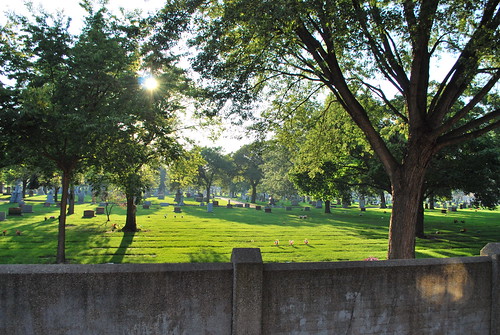
{Photo and jack-o-lantern by flickr user coldways, used under a Creative Commons license.}

A weekend of air travel--whose horrors are all too real to offer any of the pleasures of the season--allowed me finally to cross from Volume I to Volume II of the Library of America's new American Fantastic Tales. The break between volumes coincides with World War II and the concomitant shift from agrarian America to our modern, mechanized nation--but it could also be seen as representing the passing of H. P. Lovecraft, the godfather (or is it demonfather?) of American weird tales; fittingly, the second volume includes a pair of meticulous, loving homages to Lovecraft that could serve as an appropriately obscure, mildewed, and mossy grave marker.

For a fan of uncanny tales, I've read relatively little Lovecraft. He's always seemed the sort of author who is best approached as a lifetime project rather than a Roman-style feast--the post-Lovecraft visit to the vomitorium being far too grotesque for sustained contemplation. What I have read, however, has been so dense, so singular, so organically, compellingly strange, that I'm convinced of his genius* despite his uncomfortable obsessions with ethnicity and race (which, if memory serves, are well covered in this New York Review of Books piece by Luc Sante**).

So when Thomas Ligotti writes of the mysterious, Lovecraftian Professor Thoss's writings in "The Last Feast of Harlequin" (1990),
For him, the very words "New England" seemed to be stripped of all traditional connotations and had come to imply nothing less than a gateway to all lands, both known and suspected, and even to ages beyond the civilized history of the region. Having been educated partly in New England, I could somewhat understand this sentimental exaggeration, for indeed there are places that seem archaic beyond chronological measure, appearing to transcend relative standards of time and achieving a kind of absolute antiquity which cannot be logically fathomed.
--I feel that yes, yes, this is the proper back side of Thoreau's and Whitman's effusions, this is the New England I want to show rocketlass some blustery autumn. And when T. E. D. Klein's haunted, isolated narrator laments in "The Events at Poroth Farm" (1972),
[S]at down to read Lovecraft's essay on "Supernatural Horror in Literature." It upset me to see how little I've actually read, how far I still have to go. So many obscure authors, so many books I've never come across.
--I not only share the reliable despair of the reader whose quest is inevitably neverending, but also find myself reminded of the way that the ever-ramifying vista of books one ought to read mirrors the paralytic horrors of short-breathed nightmare.

Both stories are spooky, atmospheric, and memorable--honorable homages to Lovecraft. But even those efforts pale next to the work of the Propnomicon, whose meticulous constructions of Lovecraftian artifacts--as well as Miskatonic University swag--must be seen to be believed. If ever Cthulhu passeth through the land, executing judgment, surely the Propnomicon's door will be considered safely daubed.

Monday, October 12, 2009

An inner sanctum of sorts

I'm nearly finished with the first volume of the new Library of America collection American Fantastic Tales, and thus far my favorite story is "The Little Room" (1895) by Madeline Yale Wynne. Though according to the biographical note for Wynne the story is frequently anthologized, I find only a handful of listings in The Supernatural Index*

Which makes it all the more pleasant that it might as well have been written for me, combining as it does the two characteristics I love most in spooky stories, a delicate touch and a refusal to explain. In that regard, the story it most reminds me of is Robert M. Coates's "The Hour after Westerly" (1947)**. Both stories begin with minor twists on common phenomena: in "Westerly," it is a combination of deja vu and the sense one sometimes gets that a vague hour or two has passed entirely unnoticed and unmarked; in "The Little Room," it's a moment largely encountered in dreams, of unexpectedly finding a previously unseen room in a long-familiar house. Both stories edge right up to the point of making their supernatural underpinnings explicit, but ultimately shy away from anything resembling an explanation; their restraint is admirable.

However, whereas "Westerly" is an extremely good story, well worth seeking out, "The Little Room" is more effective, because Wynne tiptoes closer to an explanation--or, in a roundabout way that leaves nearly everything unsaid, several possible explanations. The tale opens with a pair of newlyweds on a train, off to visit the bride's maiden great-aunts in rural Vermont. On the train, the bride breathlessly tells her husband something strange about the aunts' house: it contains a door, behind which is sometimes a homey room and at other times is a china closet. The bride's mother told her of spending time in the room when she lived with the aunts for a while as a girl, but then being unable to find it--or even interest her aunts in the question of its absence--on her return with her husband. The bride, too, had seen the room as a girl, spending time there when visiting the aunts with her then-widowed mother, who, despite having long before written off the room's existence to childhood fancy, finds that on this visit it has returned, though the aunts continue to claim that nothing has ever changed about the house.

I won't go further than that, but you're probably already beginning to see the symbolic richness of the story, which only becomes more effective when you learn that the couch in the little room is covered with chintz that was rumored to have been the gift of a sea captain who had wooed one of the aunts, then left her unwed. The later visit to the house of a younger cousin and her friend, who from our vantage can only be imagined as partners in what then would have been known as a "Boston marriage," as well as the equivocal role played by men in the story, only compounds the mysterious aura of sex, virginity, and feminine secrets implied by the elusive room. Wynne's story offers the best sort of symbolism--not the heavy-handed one-to-one allegory of high school study questions, but the suggestive, multi-valent, organic one that has, it seems safe to presume, animated uncanny stories since the first campfires.

From the biographical note I learned that Wynne--an heir to the Yale lock fortune--published but one book, The Little Room and Other Stories. It appears to have only been printed once, in 1895, and been out of print thereafter--but Google Books came through.*** I quickly understood why the book had sunk into obscurity. Aside from "The Little Room," its six supernatural stories are mostly forgettable--not bad, but far from memorable, smoothly written for the most part but carrying nary a whiff of the truly uncanny. Most surprising, the second story is "The Sequel to the Little Room"! I began reading it with trepidation, fearing it would present answers to the many questions its predecessor had left so deliberately, intriguingly open. Instead, it failed on its own merits: whereas the dialogue in "The Little Room" is written in a light, conversational tone that felt modern, even postwar, Wynne's sequel is told largely in an awkward New England dialect that reads like a hokey facsimile of Sarah Orne Jewett that it's hard to imagine didn't seem dated even in 1895. The story offers a bit of insight into the lives of the aunts, and it flatly refuses to dispel the central mysteries of "The Little Room," but at the same time it has none of the ease and grace of that story, nothing like its jeweled strangeness.

Still, to create one perfect story is a real achievement; to have it still spooking readers more than a century later ought to satisfy any writer. Mrs. Wynne's ghost ought to rest comfortably--unless, that is, it simply prefers the pleasures of the haunt.

Saturday, October 10, 2009

"I feel my capacity to experience a terror greater than any thing yet conceived by the human mind," or, The almost universal love of the Terrible!


{Photo by rocketlass.}

Because the Library of America's new two-volume set, American Fantastic Tales, is more than 1,200 pages long--and I do have a day job--I expect I'll be doling out its many pleasures to you a bit at a time over the course of the month.

Today, pressed by a variety of deadlines that are not entirely un-ghoulish in character, I have only this to share, from Fitz-James O'Brien's story "What Was It?" (1859), which I mentioned in Sunday's post:
Insensibly we yielded to the occult force {of opium} that swayed us, and indulged in gloomy speculation. We had talked some time upon the proneness of the human mind to mysticism and the almost universal love of the Terrible, when Hammond suddenly said to me:

"What do you consider to be the greatest element of Terror?"

The question, I own, puzzled me. That many things were terrible, I knew. Stumbling over a corpse in the dark; beholding, as I once did, a woman floating down a deep and rapid river, with wildly-lifted arms and awful, upturned face, uttering, as she sank, shrieks that rent one's heart, while we, the spectators, stood frozen at a window which overhung the river at a height of sixty feet, unable to make the slightest effort to save her, but dumbly watching her supreme agony and her disappearance. A shattered wreck, with no life visible, encountered floating listlessly on the ocean, is a terrible object, for it suggests huge terror, the proportions of which are vailed. But it now struck me for the first time that there must be one great and ruling embodiment of fear, a King of Terrors, to which all others must succumb. What might it be? To what train of circumstances would it owe its existence?
I love the way in which O'Brien ups the ante in his second example, clause by clause, and how effective the image of the doomed woman is despite the scene's lack of a supernatural component. Meawhile, the list in toto makes me wish that someone had asked this question of Sei Shonagon--would she not surely have come up with a blood-curdling list of Terrifying Things?

Sunday, October 04, 2009

2BR, 1B; steps to shops, restaurants; ghost incl. free of charge


{Photo of the view from our bedroom window by rocketlass.}
Houses of any antiquity in New England are so inevitably possessed with spirits that the matter seems hardly worth alluding to. Our ghost used to heave deep sighs in a particular corner of the parlour, and sometimes rustled paper, as if he were turning over a sermon in the long upper entry--where nevertheless he was invisible, in spite of the bright moonshine that fell through the eastern window.
That's Nathaniel Hawthorne, from "The Old Manse," the inspiration for his first collection of odd and creepy stories, Mosses from an Old Manse (1846).

That passage has been on my mind lately, as rocketlass and I have been house-hunting, her particular desire for a garden having outweighed my general desire to avoid change of any sort. And as we've been wandering through hundred-year-old bungalows and farmhouse-style wood frame houses, I've been vaguely wondering about ghosts. All those families living there over all those years. . . . A selling realtor is required by law to disclose quite a bit of information about the property being sold, if it's bad--radon, mold, liens--but the law is, appropriately, silent on the topic of ghosts. So what is a realtor's duty?

Fitz-James O'Brien's short story "What Was It?" (1859), which is included in the new Library of America collection American Fantastic Tales, opens with a rental agent in just that position. And while she feels no compunction about laughing off reports of hauntings in a building she rents on 26th Street in Manhattan, it's to no avail:
The neighborhood caught up the story, and the house remained untenanted for three years. Several parties negotiated for it; but somehow, always before the bargain was closed, they heard the unpleasant rumors, and declined to treat any further.
If, after all, there's one thing you can count on the neighborhood gossips to pass on, it's surely news of hauntings--especially ones as impressive as the ones afflicting the building inn question:
Doors were opened without any visible agency. The remnants of furniture scattered through the various rooms were, during the night, piled one up on the other by unknown hands. Invisible feet passed up and down the stairs in broad daylight, accompanied by the rustle of unseen silk dresses and the gliding of viewless hands along the massive balusters.
Ultimately the problem is solved by the recruiting of a "plucky and philosophical set of boarders," whose appreciation of opium and cheap rent overcomes any trepidation they might have felt about ghosts; terror, nonetheless, ensues.

In our own house-hunt, the question came up the other night as rocketlass was climbing into a particularly spooky-looking attic--the stairs having been lopped off partway for closet space (and maximum creepiness). As she disappeared into the darkness, I asked the selling realtor if there were any ghosts up there.

The woman laughed and said no, but that she had sold a haunted house once. It was a lovely house on a street near ours that turned over with unusual frequency, and as she was setting up for an open house one sunny afternoon, she was startled to see an old man sitting in a rocking chair in the living room. He ignored her when she asked if he was there for the open house--then the sound of the doorbell made her briefly turn away, and he was gone when she looked back at the chair.

According to her, she did feel it was her obligation--in ethics, if not in law--to disclose the fact of the ghost to the couple that made an offer on the house; they disregarded her and bought the house despite, only to put it on the market themselves within a couple of years. My realtor and I were suitably impressed: either she was very, very quick on her feet--and a good storyteller to boot--or this really was something she'd experienced, however many ways one might find to explain it away. Doubt ghosts as I may, it would take quite a house for me to make an offer after hearing of a haunting; at a minimum, I would have to hire the Scooby gang to investigate beforehand.

When I put the question of the duty to disclose hauntings to our realtor, he replied that he definitely would feel obligated . . . the minute someone brought him a positive, verifiable, scientific test. Until then . . . well, for all he knows, you might have brought that ghost with you from your old place. 'Tis good to have a hard-headed rationalist as your realtor.

All of which leaves me glad to be able to say that our house, after nearly ten years of our living here, has given no signs of being haunted by anything more sinister than our three cats. In fact, now that I think of it . . . if you're a ghost who's looking for a comfortable, convenient new home, right next to the cemetery, we are currently accepting offers . . .