Wednesday, January 15, 2014

"Colonel Greene Dies of Apoplexy"

Travel and holidays have delayed my acknowledgment of a welcome reappearance from my anonymous Texan correspondent. Regular readers may remember posts about two unsigned postcards that I received in late 2012, both bearing a Dallas postmark and choice quotes from A Dance to the Music of Time. Still a welcome mystery more than a year later, they were joined in early December by a new communication, one that expanded both my correspondent's epistolary and literary ranges: a printout of the obituary of Colonel Jacob L. Greene that was published in the Hartford Courant on March 30, 1905.

Who is Colonel Greene, you ask? Well, that's essentially the question that my correspondent is hinting I should have asked back in November when I shared a story Mark Twain told about him in his autobiography. Twain makes good sport of Greene's style of public speaking, which he explains was smooth to the point of barren dullness:
His speech was always like that--perfectly smooth, perfectly constructed; and when he had finished, no listener could go into court and tell what it was he had said. It was a curious style. It was impressive--you always thought, from one comma to another, that he was going to strike something presently, but he never did.
Greene, my correspondent would have us know, was more impressive than Twain's joking might imply. The obituary opens by identifying him as the president of the Connecticut Mutual Life Insurance Company (surely the perfect job for a dull speaker, no?), but when the obituary delves into his earlier life, the story begins to get more impressive: his paternal great-grandfather was "a man of staunch character" who served as a lieutenant in the Revolutionary army, in which his maternal great-grandfather served as a general. Greene himself, meanwhile, was born in Maine, attended "the Michigan University," which at the time was newly opened and tuition-free, and became a lawyer just before the outbreak of the Civil War. "The blood of a noble ancestry burned within him," explains the Courant, "impelling the consecration of himself to the Union cause." He enlisted as a private, then advanced to lieutenant before being laid out for a full year by illness. Strength restored, he took a position under General Custer and served with "distinguished gallantry" in the battle of Trevellyan Station, where he was captured on June 11, 1864. While a prisoner at Charleston, he was among the Union soldiers forced by their captors into the path of Union shells. Eventually he was paroled, but he wasn't officially exchanged until April 8, 1865, the day before Lee's surrender. He served another full year before resigning his commission and embarking on his career as a life insurance executive.

More germane to Twain's story, however, is what comes next in the obituary:
Colonel Greene had made many public addresses. He was the orator of the day at the Grant Memorial exercises in this city and his address was pronounced a fine example of eloquence and power. . . . He had talked before Hartford audiences and elsewhere on topical subjects and on many occasions when his oratorical efforts were of the highest order. He was ever ready to speak in the interests of the poor and oppressed and always took a high stand for personal and civic morality. He was a graceful speaker and a polished writer. . . . and always acquitted himself to the satisfaction of those interested, and the great pleasure of his audience.
Which, set in the balance against Twain's depiction of a smooth-flowing river of boredom, makes me think that perhaps there's a middle ground: It's likely Greene was as good a speaker as the Courant claims, yet still wasn't up to Twain's standard. We can't all be Mark Twain, after all.

I'll close the way any sensible public speaker should do: with thanks to the person who brought me here. Hope it's a pleasant winter down there in Dallas, sir or madam. Keep the correspondence coming!

Monday, January 13, 2014

The perils of drinking in Victorian taprooms

I thought I was done writing about Judith Flanders's The Victorian City, but I can't resist sharing the passage I just read. I'm going to quote at a bit greater length than usual because (as you'll see) both sides of the story of Victorian London's drinking establishments needs to be told:
Hints to Men About Town, published in 1840, warned that "as every Man about Town is liable to be placed in situations where it is almost impossible to escape perfectly sober," such a young man needed to learn how "to take his glass . . . without making a fool of himself." The author, who called himself "The Old Medical Student," advised young men to eat as well as drink, to stick to one type of wine, not to get rowdy, and, above all, "Do not be prevailed upon to sing" (which is surely good advice today too). This was followed by a section on what to do when a friend passed out from drink and how to cure a hangover. It was all very matter-of-fact.
Is a medical student really the person to trust on this topic? I've not known a lot of them, but those I did definitely included in their number some intemperate drinkers. (Also, this is sadly pre-Jeeves: the best advice for dealing with a hangover is, of course, to ring for his assistance.)

Then there's the distaff side:
The Servant Girl in London: Showing the Dangers to which Young Country Girls are Exposed was published in the same year, but could not be further away in tone, even though its author had similarly pragmatic views. Readers were instructed that many pubs were entirely respectable, having been established by servants of gentry, and in them one could expect to meet "some of the most pleasant company. . . . The conversation is often very instructive, and well expressed . . . about politics, the news of the day, parish intelligence, and the like." It was the taproom that was the danger: "Here collect the working men, male servants in and out of place, hackney-coachmen, omnibus cads, &c.," who "drink far more in proportion than those in the parlour . . . and frequently insult most grossly" the servant girls from local houses, the "wives of mechanics [artisans], poor tradesmen, and the broken-down gentlewoman who keeps a school." These blameless females, while waiting to collect the supper beer, were obliged meanwhile to mingle with "the washerwoman, the market-woman, the basket-woman, the gaudily-attired courtesan, the sad street-walker." This mixing, warned the author, was "highly dangerous," but it was the mixing he was warning about, not the drinking.
Choose your drinking companions wisely, lady lushes! (And choose your books wisely, too: go get The Victorian City! You won't regret it!)

Friday, January 10, 2014

We already knew Dickens was good at naming

While I've got Dickens on the brain, here's a very quick post drawing on Robert Gottlieb's Great Expectations: The Sons and Daughters of Charles Dickens. Gottlieb's book is brief and synthetic rather than groundbreaking, but for Dickens fans it does perform a service: while much research has been done, and many books and articles written, about the lives of Dickens's sons, relatively little of it makes its way into Dickens biographies, which tend, reasonably, to end with Dickens's own death. So our portrait of his children is incomplete, and, Gottlieb argues convincingly, somewhat unfair: even if we know better, we tend to take Dickens's own disappointment in them as a reflection of reality, whereas their lives and fates were much more mixed, and some could certainly be called happy and successful.

For today's post, however, it's all about the nicknames. All of Dickens's children had them, some more than one, and they're fun. Herewith, in birth order:
Charles Culliford Boz Dickens, 1837–1896

Flaster Floby (a corruption of Master Toby)

Mary Angela Dickens, 1838–1896

Mild Glo'ster

Catherine Macready Dickens, 1839–1929

Lucifer Box (which Gottlieb glosses: "A 'lucifer' was a safety match, and from her earliest years Katey's temper would flare up the way matches flared up--and the way her father's did as well.")

Walter Savage Landor Dickens, 1841–1863

Young Skull ("for his high cheekbones")

Frank Jeffrey Dickens, 1844–1886

Chickenstalker (Origin obscure: "One source claims it's descriptive of 'his make-believe hunting adventures around the home place.' More generally, it's ascribed to a character in 'The Chimes.' . . . But why would you name a baby boy after a jolly, fat old lady? Was baby Frank conspicuously jolly and fat? If so, we have no record of it.")

Alfred d'Orsay Tennyson DIckens, 1845–1912

Skittles (origin obscure)

Sydney Smith Haldimand Dickens, 1847–1872

The Ocean Spectre ("because of what Georgina [Hogarth, Dickens's sister-in-law, who more or less raised the children after Dickens repudiated their mother] called his curious habit of pausing in his play, cupping his tiny hands under his chin, and casting a faraway look over the ocean.")

Sir Henry Fielding Dickens, 1849–1933

The Jolly Postboy

The Comic Countryman

Mr. H, or just H

Dora Annie Dickens, 1850–1851

Dora, always frail, died after a mere six months of life and was never nicknamed.

Edward Bulwer Lytton Dickens, 1852–1902

Plorn (Plorn was the only Dickens child to actually use his nickname out in the world; it essentially became his name.)
Two immediate thoughts come to mind on seeing this list assembled:

1. The Dickens nicknames give the Mitford girls' nicknames a run for the money.

2. That's a whole lot of children in a short time span, even for the Victorian era. The failure of the Dickens marriage, like the failure of almost any marriage, surely had multiple causes--not least of which, by any means, was Dickens himself--but it's hard not to attribute a substantial part of Catherine Dickens's decline in health, emotional strength, and general appetite for life (which drove Dickens to distraction, scorn, and eventually cruelty) to the wear and danger of that constant cycle of pregnancy and birth.

Wednesday, January 08, 2014

Keep it under your hat

I wrote about the pleasures of Judith Flanders's The Victorian City on Monday, but I can't help returning to it today to share one more wonderful bit. It comes from the same chapter as Monday's passage about the piemen, and it's a mere footnote to a section about coffee houses and the ways people ate there--including bringing their own meat for the waiter to put on the fire and cook. Flanders quotes from one of Dickens's All the Year Round pieces, "Night Walks," wherein he tells of seeing a man at a Covent Garden coffee house in 1860 take "out of his hat a large cold meat pudding." To that Flanders appends the following footnote:
If Dickens is to be believed, men kept almost everything they owned in their hats. It is almost quicker to itemize those characters who did not use their hat as a handy man-bag. Those who did include: Mr Pickwick, who keeps his glove and handkerchief there when he goes skating; in Oliver Twist a hat is home to Mr Bumble's handkerchief; the Dodger brings hot rolls and ham for breakfast in his; his pickpocket colleague Toby Crackit puts a shawl in "my castor" ["castor" = beaver]; in Nicholas Nickleby, Newman Noggs, flustered, tries to fit a parcel "some two feet square" into his, as well as keeping at different times a letter there, "some halfpence" and a handkerchief, while the moneylender Arthur Gride keeps large wedding favours in his; in The Old Curiosity Shop, Kit's handkerchief is in his hat; in Martin Chuzzlewit, Montague Tigg keeps old letters, "crumpled documents and small pieces of what may be called the bark of broken cigars" in his, while the stagecoachman uses his to store his parcels for delivery; in Little Dorrit, Pancks, the moneylender's clerk, keeps his notebook and mathematical calculations there; and finally, in David Copperfield, David puts a bouquet for Dora "in my hat, to keep it fresh"--possibly the only fully middle-class person in Dickens's novels to use this caching spot. Much later in the century Shelock Holmes notices a bulge in Watson's hat, which indicates the has stashed his stethoscope there, but there are few other mentions in fiction. I suspect it was a standard location for a man's handkerchief, and for all the other items Dickens merely thought it was funny.
If that litany of silliness hasn't convinced you to buy Flanders's book, I don't know what will!

Monday, January 06, 2014

On the streets of the Victorian city

I recently discovered that, like many people, I had been led badly astray by my youth. But unlike most people in that situation, the discovery brought joy rather than sorrow (or decades of therapy).

Specifically, I thought I'd read all of Dickens except The Old Curiosity Shop (which I've avoided for years because of Little Nell, even as I've re-read the others)--but as I read Judith Flanders's wonderful The Victorian City: Everyday Life in Dickens's London and kept encountering unfamiliar passages and characters from Oliver Twist, I realized that I actually had never read it. I'd instead checked it off the mental list twenty-plus years ago based on a jumbled recollection of having read an adaptation (think Lamb's Tales from Shakespeare) as a kid and then playing Oliver in Oliver! when I was thirteen. Oh, joy! My book bag for an upcoming London trip could be repacked--and Little Nell could live, insipidly, for another day!

That was far from the only joy I received from Flanders's book, however. I've long been a fan of her Inside the Victorian Home, which is exactly the sort of up-close, detail-and-anecdote-filled history I most enjoy, and this book takes that same approach to the streets of London.

At first I was worried that the conceit of the subtitle--that Dickens would be our guide--was merely a hook designed to capitalize on last year's Dickens bicentennial, and that Dickens would ultimately prove more window dressing (or even limitation) than central source. But oh, was I wrong: one of the great pleasures of Flanders's book is how much more she makes us appreciate Dickens's eye for detail, and how deftly she uses those details to help us understand the life Dickens was seeing around him. I can't count the number of times Flanders seizes on an expression or aside in one of Dickens's novels--the sort of descriptive texture that most readers would pass over, uncomprehending but untroubled, in the rush of Dickens's prose--and uses it to illustrate or explain some forgotten aspect of street life. Dickens, in Flanders's hands, is restored to his role of reporter and man on the street, never forgetting anything he sees his fellow Londoners do.

Perhaps my favorite example comes in the utterly fascinating chapter on street food, when Flanders gets to the piemen. Being a pieman, she explains, was not really profitable:
In the 1840s, the Corn Laws kept the price of flour high and, with it, the price of pies. To maintain their price at the expected penny, the piemen were forced to scrimp: their pies were made with cheap shortening, or had less filling, or poor-quality meat. Many of the legends of cats-meat, or worse, in pies spring from this period. In 1833, Sam Weller advises the horrified Mr Pickwick, "Wery good thing is weal pie, when you . . . is quite sure it ain't kittens," but in summer "fruits is in, cats is out."
Even the repeal of the Corn Laws in 1849 didn't help, as the piemen then found themselves competing with pie shops. So, Flanders explains, the piemen's customer base was reduced almost entirely to boys,
who worked in the streets, eating coffee-stall breakfasts, shellfish at lunch, hot eels or pea soup for dinner, perhaps with a potato, and a pie to fill in the gaps when they could afford it. What the boys loved about piemen was their method of charging. A pie cost a penny, but all piemen were willing to toss a coin for one: if the customer won, he got the pie free; if the pieman won, the pieman kept both pie and penny. Tossing for a pie was part of the language. Dickens used it regularly: in Pickwick Papers the stagecoach driver warns his passengers: "Take care o' the archvay, gen'lm'n. 'Heads,' as the pieman says.' In David Copperfield, little Miss Mowcher is like "a goblin pieman" as she tosses up the two half-crowns she is paid, as did Montague Tigg in Martin Chuzzlewith spinning a coin "in the air after the manner of a pieman."
See what I mean? I'm sure when I read those lines in Pickwick and the other novels, that I simply chalked them up as character-driven slang, with nary a though to the history they revealed.

The Victorian City is full of passages like that, ones that give you the feeling--brief and illusory though it might be--that you understand what it would have been like to walk down the streets of Victorian London. It's both a great book for the lover of London and a useful addition to the ever-growing Dickens bookshelf. (I should say: it's been available in the UK for more than a year, but the US edition isn't scheduled to be published until this summer.)

Tuesday, December 31, 2013

One of the drawers in Donald Westlake's filing cabinet was labeled "Are you still here?" Which, I trust, is where, were he still with us, he would right now be filing 2013.

From Henry David Thoreau's journals, the entry for December 31, 1851:
Ah, beautiful is decay!
Or, as Timothy Hallinan in his crime novel Crashed put it,
Hope, the slut, always springs eternal.
Happy New Year, folks--and the gods bless Damion Searls for bringing us the NYRB Classics edition of Thoreau's journals, which are guaranteed to while away many a future day.

Tuesday, December 24, 2013

Christmas Eve

To carry us into Christmas, a letter from Katherine Anne Porter, sent to Albert Erskine on December 14, 1937:
I’ve been thinking about your Christmas present. It occurs to me that I never heard you say you wanted anything. I know things that you don’t want, for example, a book. So I shan’t give you Audubon’s Birds of America simply bursting with pictures. . . . You’ve got a radio. (Don’t give me one, by the way.) . . . What about a valet rack? It says: ‘The gift of gifts for a man, exclamation point. It saves time and temper by having his clothes all assembled for the morning rush.’ And then shows a picture with sure enough everything assembled. It’s one of the ugliest things I ever saw, though.
And then, for those of you more concerned with a seasonal mood than with shopping, here's Iris Murdoch writing to Frank Thompson on Christmas Eve, 1941:
It is Christmas eve & I in Blackpool. There is the hell of a wind blowing over the house & I feel a bit withered away already. I have just received a box of expensive Turkish cigarettes from Michael. Dear old Michael. A lost soul too. (The problem is, I have been reading Virginia Woolf, the darling dangerous woman, & am in a state of extremely nervous self-consciousness. The most selfish of all states to be in.
Woolf or no Woolf, let us all leave selfishness aside for a few days. Happy Holidays, folks.

Friday, December 20, 2013

My other favorites of 2013

When rocketlass and her team won two (2!) Webbys for their redesign of the University of Chicago's main website earlier this year, she described their place at the awards ceremony as being sort of like that moment on the Oscar telecast where the announcer-voiced announcer says, "In a special ceremony earlier today, Academy Awards were given out for Best Sound Design in a Norwegian Documentary about Fjords."

You'll just have to trust me when I say that, after Monday's and Wednesday's posts about my favorite fiction and nonfiction of the year, today's mish-mash of categories doesn't represent any lesser loves. These are all books I'd vouch for just as powerfully as the ones on the more traditional lists. So here goes.

Favorite poetry of 2013

As Ed Park put it in the San Francisco Chronicle the other day, "If you buy one book of poetry this year - well, you should probably buy more than one, right?" Here's a pair.

Carrie Olivia Adams's Forty One Jane Doe's: I would quote more from this one but I gave my copy to an old bookselling friend, pressed it fervently upon him. It's that sort of book. Carrie--who, like a few others on this week's lists, is a friend--surprises with her images, searches for knowledge in antiquated sciences, and wafts over all a hint of menace. Her lines break unexpectedly, jaggedly, pull to a stop defiantly, even breathlessly. Her Jane Does are like noir heroines, seductive and dangerous, even when (possibly?) dead. "I don't know why this one or that one. But I know desire." "I don't know how to close / a door, but I am sending / the sound of it latching."

Ernest Hilbert's All of You on the Good Earth: Aside from a shade of shared noir sensibility, Hilbert's poetry couldn't be less like Carrie Adams's: where hers is fractured and fragmented, his is regimented and formal. He's that rare thing these days, a sonneteer, but he brings a conversational vibrancy to the form that continually pushes against its constraints even as it draws strength from them. And, oh, the pleasures he takes in sound and rhythm and rhyme! "Taped up, damp now, smeared photo of the stray / On each scratched steel lamppost along the way."

Favorite comic of 2013

Though I greatly enjoyed Jonathan Hickman's wondrously cosmic storyline in the Avengers titles this year, it probably requires far too much knowledge of the Marvel Universe to be a sensible recommendation for outsiders. Matt Fraction and David Aja's Hawkeye: My Life as a Weapon, on the other hand, requires only that you be willing to countenance the idea of a superhero . . . and then to watch that superhero remain heroic while dealing with the ordinary failures of daily life. It's funny and clever and surprising and beautifully drawn. (For those of you who do know the Marvel Universe, I should also recommend Fraction and Michael Allred's FF, the goofiest take yet on the meaning of the Fantastic Four.)

Favorite letters collection of 2013

Oh, J. F. Powers. What more can I say about him? His fiction is funny, moving, perceptive, worldly yet aware of grace. Because his output was relatively meager and he's thought of as "that guy who wrote about priests," he's given short shrift, but there are few writers of the last half of the twentieth century whose work I cherish more. So the arrival of Suitable Accomodations: An Autobiographical Story of Family Life: The Letters of J. F. Powers, 1942-1963 felt like a gift, a wholly unexpected chance to engage once again with Powers's inimitable voice. And what is grace but an unearned, unexpected dispensation? If you've not read Powers, start with Morte D'Urban or the short stories; if you have read Powers, pick up this book. You won't be disappointed.

Favorite daybook for the bedside table

Tom Nissley's A Reader's Book of Days: Opening pages of this calendrical collection of anecdotes at random just now, I found that on July 6, 1953, Michael Straight in the New Republic wrote of Colette that her "preoccupation is of course with women, and she despises all of them but one." And that on August 8, 1920, Katherine Mansfield wrote of E. M. Forster,
So aware is he of his sensitiveness, of his sense of humour, that they are become two spectators who follow him wherever he goes, and are for ever on the look-out for a display of feeling.
And that on October 11, 2007, Doris Lessing, on being told by reporters on her doorstep that she had won the Nobel Prize, sighed, "Oh, Christ." And there are entries for Anthony Powell and Donald Westlake and Barbara Pym and Iris Murdoch and Penelope Fitzgerald and Rex Stout and Norman Maclean and M. R. James and Samuel Johnson, and oh, have you not gone to buy this book already?

Wednesday, December 18, 2013

My favorite nonfiction of 2013

Philip Hoare's The Sea Inside: Hoare's book is ostensibly about the sea, the creatures found there, and our relationship to them. But it's as much about Hoare's mind, and the places its questing takes him, as it is about those subjects. So we learn about St. Mark the Wrestler, who "cured a hyena whelp by spitting on his fingers and signing on its eyes." And about the bad rap that ravens get. And about Hoare's ice-cold ocean swims, and his quiet home, and his memories of family. And of course about whales. It's a meandering, byways and backroads book, and it's mesmerizing.

Lucy Lethbridge's Servants: A Downstairs History of Britain from the Nineteenth Century to Modern Times: A richly anecdotal history of servants in twentieth-century Britain. What more do you need to know? Seriously: it's hard to imagine any fan of twentieth-century British literature who wouldn't enjoy this, if for no other reason than to help them understand the mostly unspoken background to the fiction of the period.

Lee Sandlin's The Distancers: An American Memoir: Lee Sandlin's memoir of a number of his ancestors (great-aunts and uncles, mostly) achieves something admirable: it brings ordinary people from generations before ours to life, locates them in their place and time, and, without setting ourselves or our own times up as better, or more advanced, shows us just how different they were, how truly far away from the familiar you get as you walk back through the decades. At the same time, he tells a moving story of ordinary people (if strange, and even in some cases damaged--driven, as Anthony Powell put it, by their own furies) living quiet lives, destined to disappear from memory were it not that they had a descendant who became a writer, one who cares about what we lose when memories fade.

Terry Teachout's Duke: A Life of Duke Ellington: In a lean year for me for biographies, Duke was a treat. I already knew that Ellington was famously elusive and hard to get to know; what I didn't know is that not that much happened in his life: he formed the band, and while there were ups and downs afterwards, that was basically it. In a certain sense the band was his life. Despite that Teachout manages to keep the narrative compelling, primarily by reliably bringing it back to the music and the players. Maybe no one really knew Ellington, but by the end of Duke we understand his genius, and admire his contribution to our culture all the more.

Carl Watkins's The Undiscovered Country: Journeys among the Dead: A perfect accompaniment to autumn's annual serving of ghost stories, Watkins's book is packed with details of how the English related to their dead--restful and walkabout alike--in past centuries. From it I learned more about the ghost-story-hunting monk of Byland Abbey, discovered that the dead buried beneath the flagstones of churches did indeed sometimes disrupt services with an olfactory reminder of the whole dust to dust bit, and of a nineteenth-century druid who was an early advocate of cremation. I've learned to trust the Bodley Head's sense of a good history--they're always rich in quotation, anecdote, surprises, and analysis--and this is the best of the year of the type.

Monday, December 16, 2013

My favorite fiction of 2013

I don't usually do anything resembling a best-of-the-year post, but because this year I

1 Read more new books than usual

and

2 Disagreed with the critical consensus more than usual (really disliking a lot of the books that are making best-of-the-year lists),

I decided to go ahead. Today will be my favorite fiction, Wednesday my favorite nonfiction.

Favorite fiction of 2013

Carlene Bauer's Frances and Bernard: A brilliantly realized, wholly convincing epistolary novel. I wrote about it back in February when I first read it, and I've continued to recommend it in the months since.

Caleb Crain's Necessary Errors: I happened to take this brilliant debut novel with me on a work trip to Prague this summer, only to discover when I opened it that it's about young American expatriates . . . living in Prague. Over the course of more than 400 pages, not much happens--except that Crain manages to takes us back to that moment in life when we're poised between youth, with its structures and deadlines, and adulthood, with its terrifying wide-openness. Our time horizons then were so short, our experience (despite what we told ourselves) so limited, that every single thing, person, and event seemed of outsized, at times monumental, importance, and Crain--with neither too much irony nor false naivete--makes us feel that again in all its self-involved glory. It's an incredible achievement.

Gaito Gazdanov's The Spectre of Alexander Wolf: It seems like an extra treat when you happen upon a favorite book of the year in early December--and you find it because the single line on the back cover convinces you to pick up:
Of all my memories, of all my life's innumerable sensations, the most onerous was that of the single murder I had committed.
A young man who killed an opposing soldier during the Russian Civil War happens upon a book of short stories in which one of the stories tells of the killing--and which could only be the work of the dead man. That sets him off on an investigation, and along the way the story turns and shifts, interpolating other stories with a narrative confidence and storytelling fecundity that reminds me of nothing so much as Roberto Bolano. The book was first published in 1948 in Russia, its author a taxi driver, but it feels as fresh as any of the new books on this list. Pushkin Press seems to have increased their presence in the States substantially this year, which is all to the good for readers, and this is the best yet.

A. L. Kennedy's The Blue Book: A novel that tries to wrong-foot the reader from the very start, full of tricks and misdirections, appropriate for a story of people who work in the borderlands between magic and con artistry. It's clever, engrossing, funny, dark-hearted, and ultimately moving. I'd not read Kennedy before, but this book will send me to the rest of her work.

Sam Lipsyte's The Fun Parts: With the possible exception of my friend Ed Park, there's no comic writer working today whose sentences I enjoy more. Not every story in this collection is wholly successful, but even the lesser ones offer finely honed sentences--sonically and rhythmically rich and brilliantly funny.

Matthew Specktor's American Dream Machine: I wrote about this one very briefly in the summer, calling it a cousin to Steve Erickson's Zeroville. But it's better than Zeroville, trading Erickson's distance for empathy. Specktor tells a story of Hollywood success (and the problems it brings), and it's that relatively rare multi-generational story where both generations are wholly believable, their different worlds and worldviews fully realized.

Thursday, December 05, 2013

Colophons

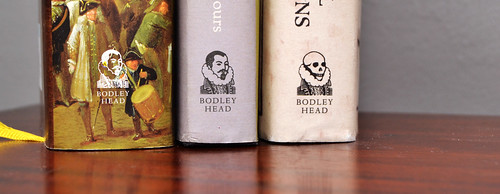
Work leaves me behind-hand this week, and possibly next, so blogging may be spotty. Today, though, I've at least got this photograph, kindly taken for me by rocketlass.


The book on the right? It's Carl Watkins's The Undiscovered Country: Journeys among the Dead. Well played, Bodley Head. Well played. {P.S. All three of these books--the other two being Jerry White's London in the Eighteenth Century and Emily Cockayne's Cheek by Jowl: A History of Neighbours--are quite good and well worth your time.}

Monday, December 02, 2013

Christmas crime


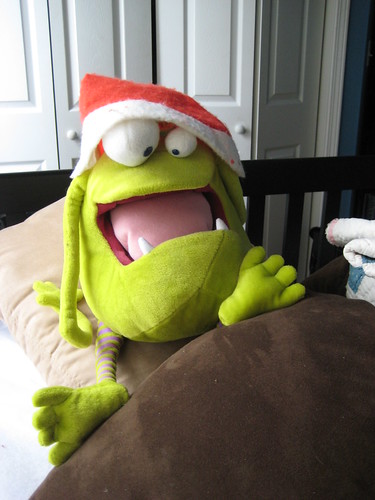
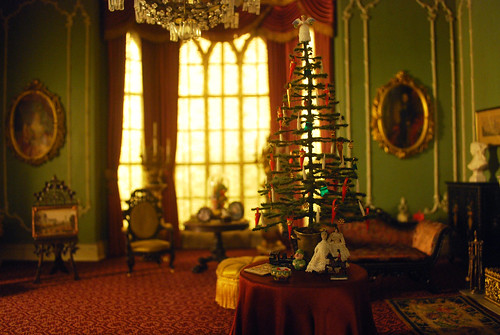
{Photos by rocketlass.} I've become a big fan the "Big Book of" anthologies that Otto Penzler (and, one presumes, his small team of Oompa-Loompas) has been editing the past few years for Black Lizard. The Big Book of Ghost Stories has whiled away October nights for two years now, with many more to come, while The Black Lizard Big Book of Pulps makes great reading to accompany Donald E. Westlake's reflections on the history of the private eye in "The Hardboiled Dicks." (What's that you say? Oh, right, sorry--you'll have to wait until next September to read that, when The Getaway Car comes out to read that essay. It's a present for next Christmas. Meanwhile, however, the Big Book of Pulps is, as its name suggests, big, so you can get started now without qualms.)


This year brings the volume that is at the same time the most unexpected and most useful: it's The Big Book of Christmas Mysteries. As a fan of holiday episodes--there's nothing like Jack Benny shopping, or trimming the tree with bubble gum bubbles--I've always appreciated a seasonal story, but in these fallow days for magazine stories, I'm unlikely to run across a Christmas mystery. Otto Penzler has solved that problem with 650 pages of stories from the past century. Like Penzler's other anthologies, it's a nice mix of old chestnuts and less-expected names: Agatha Christie stories bookend the volume, and Conan Doyle, G. K. Chesterton, Edgar Wallace, Ellery Queen, and Rex Stout all make appearances, but so do Donald Westlake, John D. MacDonald, Sara Paretsky, Ed McBain, Max Allan Collins, Thomas Hardy (really--that Thomas Hardy), Stanley Ellin, Isaac Asimov, and John Mortimer. The stories are a mix of charming and hard-boiled, and while I expect that none of them will change your life (even your reading life), the ones I've read thus far have all offered the unmatched pleasure of a well-told tale.


I'll close tonight with the beginning to the Ellery Queen story, "The Adventure of the Dauphin's Doll" (1948). I'll quote at a bit more length than usual to get you through the whole opening:
There is a law among storytellers originally passed by Editors at the cries (they say) of their constituents, which states that stories about Christmas shall have children in them. This Christmas story is no exception; indeed, misopedists will complain that we have overdone it. And we confess in advance that this is also a story about Dolls, and that Santa Claus comes into it, and even a Thief; though as to this last, whoever he was--and that was one of the questions--he was certainly not Barabbas, even parabolically.

Another section of the statute governing Christmas stories provides that they shall incline towards Sweetness and Light. The first arises, of course, from the orphans and the never-souring nature of the annual Miracle; as for Light, it will be provided at the end, as usual, by that luminous prodigy, Ellery Queen. The reader of gloomier temper will also find a large measure of Darkness, in the person and works of one who, at least in Inspector Queen's harassed view, was certainly the Prince of that region. His name, by the way, was not Satan, it was Comus; and this is paradox enow, since the original Comus, as everyone knows, was the god of festive joy and mirth, emotions not commonly associated with the Underworld. As Ellery struggled to embrace his phantom foe, he puzzled over this non sequiter in vain; in vain, that is, until Nikki Porter, no scorner of the obvious, suggested that he might seek the answer where any ordinary mortal would go at once. And there, to the great man's mortification, it was indeed to be found: On page 262b of Volume 6, Colbe to Damasci, of the 175th Anniversary edition of the Encyclopedia Britannica. A French conjurer of that name--Comus--performing in London in the year 1789 caused his wife to vanish from the top of a table--the very first time, it appeared, that this feat, uxorial or otherwise, had been accomplished without the aid of mirrors. To track his dark adversary's nom de nuit to its historic lair gave Ellery his only glint of satisfaction until that blessed moment when light burst all around him and exorcised the darkness, Prince and all.

But this is chaos.

Our story properly begins not with our invisible character but with our dead one.
And off it goes. I'd actually never read Queen before, and I was so pleasantly surprised by the light, even effervescent tone of the opening, the obvious fun that Queen was taking in the crafting of sentences that while the rest of the mystery can't quite live up to the fun of its entrance, that was a small matter.


I think I may adopt "But this is chaos!" as a refrain in all sorts of writing.

Tuesday, November 26, 2013

Thanksgiving with Twain and Thoreau


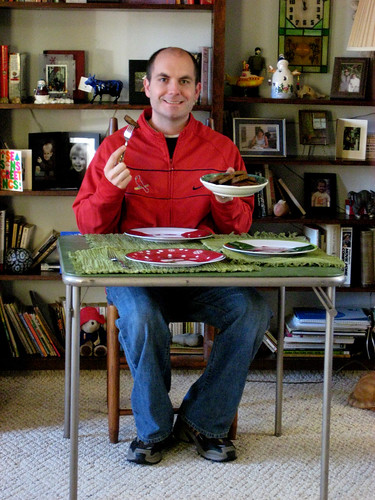
{Photo by rocketlass.}

In his autobiography, Mark Twain--in one of the rambling asides that, taken together are the autobiography--writes briefly of Thanksgiving:
The original reason for a Thanksgiving Day has long ago ceased to exist--the Indians have long ago been comprehensively and satisfactorily exterminated and the account closed with Heaven, with the thanks due. But from old habit, Thanksgiving day has remained with us, and every year the President of the United States and the governors of all the several states and the territories set themselves the task, every November, to advertise for something to be thankful for, and then they put those thanks into a few crisp and reverent phrases, in the form of a Proclamation, and this is read from all the pulpits in the land, the national conscience is wiped clean with one swipe, and sin is resumed at the old stand.
Twain can always be counted on to prick self-regard, be it national or personal. But even a pricked Thanksgiving can be a source of joy: even family sans illusions remains family, and seeing them a pleasure. The holiday falling late this year, you might, if you remember, follow your meal, and football, and shopping, with a toast on Saturday to Twain himself, who, had he the physical immortality to match his literary life, would be turning 178.

Thoreau is another to turn to as Thanksgiving approaches; for all his grumbling and unsociability, gratitude was an emotion he understood. On December 12, 1851, the thirty-four-year-old Thoreau wrote in his journal,
Ah, dear nature, the deep remembrance, after a short forgetfulness, of the pine woods! I come to it as a hungry man to a crust of bread.

I have been surveying for twenty or thirty days, living coarsely even as respects my diet,--for I find that will always alter to suit my employment,--indeed, leading a quite trivial life; and tonight, for the first time, had made a fire in my chamber and endeavored to return to myself. I wished for leisure and quiet to let my life flow in its proper channels, with its proper currents; when I might not waste the days, might establish daily prayer and thanksgiving in my family; might do my own work and not the work of Concorde and Carlisle, which would yield me better than money.

(How much forbearance, ay, sacrifice and loss, goes to every accomplishment! I am thinking by what long discipline and at what cost a man learns to speak simply at last.)
For those on the East Coast, facing a storm that dealt Chicago but a glancing (if frigid) blow, a more prosaic entry may be in order, like this one from November 24, 1857:
Cold Thanksgiving weather again, the pools freezing.
Freezing it may be, overblown and self-regarding it may be, contemplative and restorative it may never wholly be--but ever since 1996, when I spent my one and only Thanksgiving out of the country, and thereby fully realized for the first time how much I appreciated the simple pleasures it offers of family and food, I've been a devotee, if not an evangelist. Have a good Thanksgiving, folks. May your family be well, and your life flow in its proper channels.

Friday, November 22, 2013

Mark Twain and Satan!

Now how's that for a headline?

Tonight I'll share a couple of additional little bits from Mark Twain's autobiography, and this time, they'll involve Satan! Or at least his name. Having grown up in a small town on the northern edge of the Bible Belt, I'll admit to still getting a bit of a charge out of silly blasphemies. It's something one ought to grow out of, certainly, but I can still get a good chuckle out of a "Christ on a crutch!" or John Hodgman leading his audience in a chant of "Hail, Satan!"--as, it seems clear, Mark Twain would have as well.

The Autobiography includes a couple of jokey references to Satan. The simplest and most charming is this one:
At one time when the children were small we had a very black mother-cat named Satan, and Satan had a small black offspring named Sin. Pronouns were a difficulty for the children. Little Clara came in one day, her black eyes snapping with indignation, and said,

"Papa, Satan ought to be punished. She is out there at the greenhouse, and there she stays and stays, and his kitten is down stairs crying."
The more amusing reference comes when Twain is railing against newly restrictive postal regulations that, he says, have snarled up mail all over the east coast because the addresses on the envelopes don't conform to the tightened specs. Arguing for looser interpretations, and more diligence on the part of the postal service, he points out that he once received a letter addressed only to:
Mark Twain.

Somewhere,

(Try Satan.)
As Twain puts it, "That stranger's trust was not misplaced. Satan courteously sent it along."

This next bit doesn't have any satanic content--unless you're more down on Teddy Roosevelt than, for all his faults, I can ever bring myself to be--but I can't pass up a chance to share it, too: Twain also once received a letter that had been addressed to:
Mark Twain

c/o President Roosevelt

The White House

Washington

America

--------

USA
Seriously, folks: this book is so much fun that I could pass along entertaining bits from it every day until spring and not run short. And that's taking into account that, unlike a letter sent care of Satan, a Chicago spring can't in any way be counted on to arrive in a timely fashion.

Wednesday, November 20, 2013

If you've got an unread copy of Mark Twain's autobiography on your shelf, read it!

For decades, the title of Most Unread Book was held, with the blithe confidence of a late Romanov, by Stephen Hawking's A Brief History of Time. Of the approximately forty billion copies that book sold, I believe at last count twenty-nine had been read all the way through.

I suspect, however, that it may now have a rival. In the fall of 2010, the University of California Press pulled off a publishing coup capped by a publicity coup: the publication of the The Autobiography of Mark Twain, Volume 1. By pitching the story of Twain's wish that the book be embargoed until a century after his death, a provision that, he argued, would free him to offer unvarnished accounts of his life and similarly honest opinions of those he knew, California landed an incredible amount of publicity--then sold a commensurate number of books.

Which, let's be clear, is a good thing. But it's also a trick worthy of Twain himself: most of the coverage emphasized Twain's embargo, while the fact that a not insubstantial portion of this material had already been published--a lot of it under that very same title, The Autobiography of Mark Twain--was missed. I don't think I'm an unreasonable example: I pay a lot of attention to books and publishing, and it wasn't until right before I got my copy that I learned that the embargo was more sizzle than steak. In a sense, Twain got to play one last joke on the American people, a century beyond the grave.

So something like half a million people got the book . . . and, wow. It's huge: 7-1/2" x 10-1/2", 760 pages, and nearly 5 pounds in weight. And it's daunting. Twain's text is buttressed by what Booklist, in a rave review, mildly called "substantial editorial apparatus": 20 pages of acknowledgments, a 60-page introduction, and 200 pages of notes at the back end. Once you wade through the prefatory material, you get to . . . a bunch of short, disconnected bits of memories and memoir, interspersed with clippings from newspapers, none of which at a glance seem to be taking anything like the form of an autobiography. So you flip through it, and, finally, on page 201, you get to a section called, straight up, The Autobiography of Mark Twain. Whew.

But even that starts out with fragments. "So much for the earlier days, and for the New England branch of the Clemenses." Autobiographies are not generally supposed to start in media res. So you flip ahead a few more pages, and what you find is more fragmentation: entries labeled with progressive days in 1906, tied to no obvious chronology or plan.

I suspect that's where a lot of people stopped reading. It just appears to be asking too much.

But if you're one of those people--as I was until last week--I urge you to try again. As the reviews from 2010 all tried to tell us, there's a great book hiding in there! Twain's method--to eschew chronology in favor of dictating stories from present and past as they came to mind--is the method of a man too old and unsystematic to write a proper autobiography, and that lack of system is responsible for a lot of the initial confusion you encounter on opening the book. Fragment of memory leads to current anecdote leads to reflections on old friends and so on, and at no point can you say, "Here is where I am in Twain's life."

The method may be suspect (and lazy?), but surprisingly it pays off: rather than run us through the by-now familiar paces of Twain's life story, the book instead ends up absolutely chock-full of stories, jokes, anecdotes, opinions, ephemera, and nonsense. Page after page after page simply glows with Twain's inimitable, indomitable personality and humor. I'm absolutely astonished at how much I enjoyed this book, and I'm so grateful to Maud Newton, whose long-ago praise for it lingered in my mind and kept me going back to my shelves every once in a while to give it a heft and consider diving in.

I've rambled long enough already, but I don't want to leave this post without giving you a taste of the pleasures of the book. So here is a passage, utterly inconsequential in the scheme of Twain's life, but wholly typical of the sort of wit, digressions, and character sketches the book offers on nearly every page. Twain is telling of a meeting of a discussion group he was once part of in Hartford, the Monday Night CLub, and of the speech of one Colonel Greene on the topic of dreams:
Colonel Greene discussed the Dream question in his usual way--that is to say, he began a sentence and went on and on, dropping a comma here and there at intervals of eighteen inches, never hesitating for a word, drifting straight along like a river at half bank with no reefs in it; the surface of his talk as smooth as a mirror; his construction perfect, and fit for print without correction, as he went along. And when the hammer fell, at the end of his ten minutes, he dumped in a period right where he was had stopped--and it was just as good there as it would have been anywhere else in that ten minutes' sentence. You could look back over that speech and you'd find it dimly milestoned along with those commas which he had put in and which could have been left out just as well, because they merely staked out the march, and nothing more. They could not call attention to the scenery, because there wasn't any. His speech was always like that--perfectly smooth, perfectly constructed; and when he had finished, no listener could go into court and tell what it was he had said. It was a curious style. It was impressive--you always thought, from one comma to another, that he was going to strike something presently, but he never did. But this time that I speak of, the burly and magnificent Rev. Dan Burton sat with his eyes fixed upon Greene from the beginning of the sentence until the end of it. He looked as the lookout on a whaleship might look who was watching where a whale had gone down and was waiting and watching for it to reappear; and no doubt that was the figure that was in Burton's mind, because when at last Greene finished, Burton threw up his hands and shouted, "There she blows!"
That "dimly milestoned"; the sense of appreciation, bordering on awe, for a rare skill; the precise and effective choices of words and images ("burly and magnificent," "dropping" a comma, "a river at half bank with no reefs in it," "staked out the march"); and the pleasure of the Reverend Burton's silly joke, preserved forever because it caught Twain's fancy. What fun this book is!

Now I can't wait to read the second volume, which arrived in stores last month. If Volume 1 is on your shelf keeping Hawking company, you could do a lot worse with your Thanksgiving than to take it down and chuckle over it while your relatives watch football.

Friday, November 15, 2013

Barbara Pym for a Friday

I've spent my week with three of my favorite comic writers: Mark Twain, whose mess of an autobiography I've finally sunk happily into; Donald E. Westlake, whom I'm sort of always reading; and, this morning, Barbara Pym, who earned her place in my shoulder bag by writing novels that weigh approximately infinity less than Twain's gargantuan book.

And what a good choice! The novel is the posthumously published An Academic Question, one of the very few I still have to read, and it was such pleasant bus-and-train reading. I'll just quickly share a couple of perfectly Pym scenes. First, a brief discussion between Caro Grimstone, a bored academic housewife, and her (presumably gay) fancy male bachelor friend, Coco:
Coco, in whom I had unwisely confided one evening when he took me out for a drink, advised me to acquire a lover.

"That's what people do," he said, as if I had no knowledge of the world.

"Yes, of course," I agreed. "But who, or whom, come to that--who is there in a place like this?"

Coco became vague. He had nobody definite in mind, and I certainly wouldn't be satisfied with just anybody. A distinguished artist or writer, or even a member of a noble family or an exiled royal--perhaps there was one such living in the town. After all, it was the kind of place people like that come to--witness the example of himself and his mother.

"But an exiled royal would probably be decayed and moth-eaten," I protested, "and I want better than that."

"A pity," Coco sighed. "It would have been amusing--I should have liked acting as a go-between."
So much of Pym's particular eye and voice are on display here: all confidences, in Pym, are "unwise," are they not? And who but a Pym character stops midsentence to clarify that her imagined lover is the object ("whom") rather than the subject ("who") of her sentence?

Later, Caro attends a tea at the home of her friend Dolly, who runs a second-hand shop that spills its wares into her living quarters:
We finished the meal and moved into Dolly's sitting room, finding seats as best we could while she made coffee. There was an uneasy silence while she was out of the room, for to settle ourselves at all comfortably various books and objects had to be moved and there was nowhere to put them. To have to do this at all seemed like a criticism of our hostess and I think only Dick Merrilees and I, who knew her best, were unembarrassed.

"Did you see the play about John Aubrey?" Dick asked. "That stage set reminded me of Dolly's room."

Evan Crannon held up what looked like a dried hedgehog's skin which he had moved from a corner of a sagging sofa where he had been about to sit.

"What shall I do with this?" he asked.

"Oh, that's nasty," said Menna in a low voice. "Some old skeleton."

"Yes, I found it in a drain," said Dolly coming into the room and taking it from him. "Goodness knows how long it had been there--see, it's quite dried, all the flesh gone. What happened to that poor creature? That's what we must ask ourselves."

"Perhaps it got run over and somebody flung it over your wall," Alan suggested.

"It may have died of natural causes," I said hastily, feeling that Dolly was becoming distressed.
I promise I didn't quote that scene for the mention of John Aubrey, but because it's amusing on its own terms and because, combined with the conversation above about adultery, it brought to mind Iris Murdoch, and how easily the situation and setting that Pym is creating for her characters could be repurposed for a Murdoch novel. But oh, how different the tone. The playfulness wouldn't be entirely shed, nor would the humor, but the adultery would be undertaken and immediately begin spinning off casualties, while the mess of Dolly's house would be portrayed not as gentle eccentricity but as squalor, uncomfortably unsettling and indicative of a deeper disorder.

Murdoch is another personal favorite, like Pym, and I take great pleasure in reading and rereading her books. But for a Friday morning's commute, I was glad that my companion was the more gentle, more forgiving of the two.

Wednesday, November 13, 2013

More Anthony Powell on John Aubrey

Monday's post on Anthony Powell's John Aubrey and His Friends led to a Twitter exchange with John Wilson, Powell fan and editor of Books and Culture. John kindly pointed me to a passage in the third volume of Powell's autobiography, To Keep the Ball Rolling: Faces in Our Time, wherein Powell identifies precisely what drew him to Aubrey:
Antiquary, biographer, folklorist, above all a writer in whom a new sort of sensibility is apparent, the appreciation of the oddness of the individual human being. Aubrey's real originality in this respect is often dismissed as trivial observation, dilettantism, idle gossip, by those who have skimmed through his writings superficially. . . . Aubrey, it is true, was incapable of running his personal affairs in a coherent manner, accordingly, as he himself pointed out, never had an opportunity to work consistently for a long period at any of the subjects which preoccupied his mind. That did not prevent him from contributing to English history a very fair proportion of its best character sketches and anecdotes. . . . Aubrey's essentially new approach was vested in the manner in which he looked at things with an unprejudiced eye; an instinct for what his contemporaries, or historical figures, were like as individuals; his mastery of the ideal phrase for describing people.
John pointed out that the criticisms Powell cites as inappropriately made of Aubrey are not dissimilar to those levied by readers only casually acquainted with Powell's work. And indeed, Powell's entire description of Aubrey reveals him as more than merely a biographical subject; rather, he is a kindred spirit, his approach to people and life lining up almost perfectly with Powell's own.

Elsewhere in the book, while writing about Aubrey, Powell makes a case for the pleasures, and value, of archival research:
People who have never undertaken this sort of first-hand research perhaps miss something in life, a peculiar magic which makes time-travelling practicable. As one becomes increasingly steeped in a period like Aubrey's, one acquires for the moment a strangely intimate acquaintance with a crowd of deceased persons. After such burrowings into the past come to an end, so equally does the sense of existing in another century; the names of Aubrey's friends hard to remember like those of some wartime colleagues.
Which leads me to two thoughts:

1. The only thing close to research I've done in the past twenty years was working on The Getaway Car: A Donald Westlake Nonfiction Miscellany. And while that was, in research terms, a very modest project, the materials being all fairly recent and for the most part discoverable via contemporary library tools, at the same time I recognize the "peculiar magic" Powell describes. I felt it as Ethan Iverson and I were going through Westlake's files, examining each piece of repurposed hotel stationery and typewritten note to see if this one, or that one, might yield a surprise discovery. (Enough of them did to even now, seven months later, leave me excited when I think about it.)

2. As for living with the characters you unearth, that calls to mind Powell's own fiction, and the way that any fan will eventually mention to a new reader that once you're steeped in Dance, you will start to see its characters everywhere in your life. You know them so well, and they're drawn from such inexhaustible human patterns and drives, that they populate not just your imagination, but your toolkit for understanding the world. Unlike wartime comrades, they don't seem to ever fade.

Monday, November 11, 2013

Anthony Powell on John Aubrey, far from "bloody boring"

Graham Greene, following an argument with Anthony Powell over delays in the publication of his John Aubrey and His Friends on the part of Greene's firm, Eyre & Spottiswoode, famously called Powell's biography "a bloody boring book."

He's not entirely wrong. The life of Aubrey offers an irresistible opportunity for Powell to indulge in two of his favorite pastimes, heraldry and genealogy. And while, given what we know from his fiction of how he saw the structures of society and their relation to the individual, it's easy to understand why he finds the two subjects of such interest, it's hard for the rest of us to work up a similar enthusiasm, especially when it comes to minor cousins and manservants of little-known acquaintances of Aubrey. (To be fair, such attention to peripheral matters does occasionally pay off, as when Powell points out that the offer of a favor from a fourth cousin, once removed, "is a good illustration of seventeenth-century acceptance of remote family ties.")

Add in the fact that Aubrey's life has to be reconstructed from a small, quite messy amount of source material--in his biography of Powell, Michael Barber points out  that
the few scraps of autobiography he completed were prefaced by the instruction that they should be interposed "as a sheet of wast paper only in the binding of a book"
--and that the unsettledness of seventeenth-century English life around the Civil War makes parsing people's social, religious, and political positions both essential and difficult, and you've got a recipe for, well, a "bloody boring book."

Ah, but it's Powell, and it's Aubrey, and just often enough, throughout the book, there is a moment that makes it all worth the trouble. It's easy to see why Powell chose Aubrey as a subject: they share a catholic interest in every facet of human behavior and the stories they generate. Especially the odd ones. Aubrey's life work was the lives of others, and even in his own biography he takes a back seat regularly to the stories of those around him, Nick Jenkins–style. We get the occasional ever-so-Powellian observation, like this, from his explanation of how Aubrey and the prickly Oxford antiquarian Anthony Wood (who was "at odds with almost everyone with whom he came in contact"*) were able to maintain a friendship for decades despite being of wildly different temperaments: It was because of their
unworldliness, a quality whose various forms can bind into some sort of affinity widely divergent types of men.
Sady, unworldliness could only do so much, and once they fell out, Wood blasted Aubrey as
a shiftless person, roving & magotie-headed & sometimes little better than crazed.
We also get a memorable line on the academy, which Powell, though never truly a scholar, was astute in assessing: It is plagued by
those uninviting pedants who at any period form a scarcely avoidable ingredient of academic life.
Then there's Powell, who wouldn't turn diarist until late in life, pointing out the problem with Anthony Wood's otherwise quite useful diaries: Wood, he fears, fell victim to
the besetting frailty of the diarist, that is to say "touching-up" passages at a date later than that of the original entry.

Ultimately, however, it's Powell's liberal use of quotation from the letters of Aubrey and others that bring Aubrey, the book, and the seventeenth-century world, to life. Take this letter, from November 28, 1671, from Aubrey to Wood, on the perpetually difficult theme of Aubrey's family:
I have a great desire to see my honest brother Tom well settled, marryed to a good discreet wife with about 800li or 1000li which his estate (Chalke farme 250li per annum) does very well deserve. I wish you could find [such] another as your sister-in-law or neice if she were big enough. My great-grandmother was of Oxfordshire: and I like the people mighty well. About Chalke are no wives nearer than Salisbury, prowd and all gamesters, and unknowing or unfit for a country gent., turne and in North Wilts they will be drunken. Is it not an odd thing to send to a monk and an antiquary about such a question, but how can I tell what may happen. Some of your acquaintances may hint.
Troubles of that sort were never far from Aubrey, who lived the last half of his life as a roving guest in the country homes of friends and patrons, often living secretly to hide from his creditors. As he writes in another letter, "New troubles arise from me like Hydra's heads," and
This yeare all my businesses and affaires ran kim kam. Nothing took effect, as if I had been under an ill tongue.
In a letter to Wood, he tells of putting his books in a trunk,
but dare not trust my brother with the key, for my books would be like butter-flies, and fly about all the country.
In a later letter to Wood, he worries about the fate of his papers, which he has given to Elias Ashmole for eventual deposit in the new museum Ashmole was founding in Oxford:
My heart is almost broke and I have much adoe to keep up my poore spirits. . . . I sent 4 or 5 yeares since (upon the threatening of my brother to throw me into Gaole [to avoid it himself, for debt]) those Things to Mr Ashmole in a Deale-Box, which was bigger than the thing required: but about a yeare since Mr Ashmole had occasion for a Box of that bignes, and tumbled out my things into that lesser box I sent downe: but I find it like a transfusion of Chymicall Spirits out of one glass into another, they wast by it: and some papers I am sure are miscarried. . . . all my Bookes at Mr Kent's; so that if I had leisure I cannot enjoy them.
As someone who at one point had most of his books packed up for a year in vain service to the gods of real estate, I sympathize deeply.

The letters are also full of dashed-off notes of encounters and marvels, as when in Orleans Aubrey met, writes Powell, "a young man whose left cheek had been gnawed by a werewolf." Aubrey explains that the man knew it had been a werewolf,
for, he sayd, had it been a wolfe he would have killed me outright and eaten me up.
On hearing music coming from a French church, he comments that
the French have much better, stronger, and clearer voices than the English.
Of clothiers, he remarks,
They steal hedges, spoil coppices, and are trained up as nurseries of sedition and rebellion.
Wandering London, he saw oddities:
On the day of St John the Baptist, 1694, I accidentally was walking in the pasture behind Montague House. It was 12 o'clock. I sawe there about two or three and twenty young women, most of them well habited, on their knees very busy, as if they had been weeding. I could not presently learn what the matter was. At last a young man told me that they were looking for a coal under the root of a plantain, to put under their head that night, and they should dream who should be their husbands. It was to be sought for that day and hour.
Alas, aspiring brides: that pasture now is covered by the British Museum; I fear your future husbands have flown.

Ultimately, however, it is as much Aubrey's relationship to time as it is his love of oddity and anecdote that makes him such a good subject for Powell. As Powell wrote in an introduction to a 1976 edition of Aubrey's Brief Lives published by the Folio Society,
He was there to watch and to record, and the present must become the past, even though only the immediate past, before it could wholly command his attention.
We can't help but tell our stories from the moving train, with all the distortions and biases that entails. But the genius of Powell as a fiction writer and Aubrey as a chronicler lies largely in their preference for looking back a few cars, for giving people and events and anecdotes time to sort and settle and find their level. To allow time to help interpret, as time will.

Friday, November 08, 2013

John Aubrey and the problems of servants

Some recent e-mail exchanges with critic and nonfiction writer Lee Sandlin--who has a new memoir of his family out--have sent me yet again back to Anthony Powell. Lee is re-reading A Dance to the Music of Time, and while that is what's tempting me--there's nothing more autumnal than to embark on yet another re-reading of those novels--I've thus far staved it off by dipping back into Powell's notebooks and, tonight, his biography of John Aubrey.

From which I draw the following amusing incident. Aubrey has been summoned by his patron, Lord Thanet, whom Powell describes as "pompous, facetious, and perhaps rather pathetic with his personal preoccupations and his scurvy." Courteously, Lord Thanet has sent a horse and groom; uncourteously, he has also sent some unusual instructions via letter:
By this Groome I have sent a horse and your Portmantue, and I hope your returne hither on him will be not faster than when we went hence to Folkestone, the horse being at grasse, and since myne, neaver used to hard rideing. Some two days since, the Groome being sent with my Coachman upon some business of mine, very fairely that day went to an Alehouse and there stayed most part of the day, for which fault I enjoyne him this pennance, being to have him retourne upon his faire feet without a Launce from Coldham hither, without soe-mutch as allowing a Jugge of beer by the way. Of this keep him in ignorance till you are on horseback, else disgusted with the penance, and by way of revenge, he may neglect it lookeing to the horse as he ought, and being ready to come out, then open the commission and show him.
As Powell points out, it would have been the better part of both honor and staff management for Lord Thanet to have handled the discipline himself rather than farm it out to Aubrey without so much as a by your leave,
especially when the latter [was] suffering financial embarrassments, which were certainly a matter of common knowledge; while for Aubrey, unusually benevolent to servants (often to the extent of being imposed upon) such instructions could have been nothing but disagreeable.
How could anyone with Aubrey's wide-ranging curiosity (to say nothing of laziness and disorganization) be anything but generous to servants? I like to assume that Aubrey read the letter, sized up the situation, and came to some sensible agreement with the groom, one that involved food and beer and sensible discretion.

Wednesday, November 06, 2013

The early Nancy Mitford

What better way to emerge from the ghosts and gloom of October--and distract oneself through the drizzle and sleezing rain of the opening of November--than to dive into the frothy nonsense that is an early Nancy Mitford novel? While I've long been a fan of Mitford's best-known, most-respected novels, Pursuit of Love and Love in a Cold Climate, until this week the only one of her early books I'd read was Wigs on the Green. It's funny, if slight, but it didn't lead me to her others--I suspect because Mitford herself was so dismissive of them, at least in her letters to Evelyn Waugh. In a letter of November 5, 1951, Mitford told Waugh that Hamish Hamilton had just come over to convince her to let him reprint Wigs and Christmas Pudding, and "I gave way, though I know unwisely." Three days later, she was on the topic again:
I'm in a great state about my early books. I think I told you Jamie came over specially to ask me for them to be reprinted, which softened me. Then I read them. Well Wigs on the G. which isn't too bad, I find, is a total impossibility. Too much has happened for jokes about the Nazis to be regarded as funny or as anything but the worst of taste. After all, it was written in 1934. I really couldn't quite have foreseen all that came after. So that is out. Xmas Pudding is pathetic, badly written, facetious & awful. I can't conceive why he wants it & the fact that he does has shaken my faith in his judgement.
Mitford's embarrassment likely contains at least an element of performance: throughout the correspondence with Waugh, you get the sense that she views herself as a distinctly inferior talent, which results in wide-ranging, mostly comic self-deprecation. But given that her only real complaint about Wigs is its inappropriateness, and that later in the month she calls Pigeon Pie, her fourth novel, "better than the others," I'm willing to take her assessment  of Christmas Pudding mostly at face value.

Waugh's response is entertaining:
You could write a most amusing & interesting and popular work in this way: Describe yourself in 1951 taking up Wigs on the Green and rereading it for the first time since its publication. Print 2/3 or half of the original text with constant interruptions from your 1951 self asking: "Why did I say that?" or saying "This still seems funny, why?" So in the easiest & most informal way possible you could write your reminiscences & the history of the deteriorating world and the improving authoress.
Don't you wish she'd run with that idea?

With more distance, both in person and in time, Christmas Pudding looks much, much better than Mitford would have you believe. It's arch and artificial and light, but it also has the pleasantly anarchic heedlessness of '30s English comic novels, the sense that the old things of the world have lost their attraction and the new ones are mostly meant to throw around and smash up. What in Waugh is sour and in Anthony Powell is a bit confused in Mitford is a source of simple entertainment: having no responsibilities and no reason to prefer one action over another, the Bright Young Things simply do--they party and propose and pilfer and play, and Mitford show us how silly they are as they do it all. Eighty years later, for a few hours at a time, it can be wonderfully entertaining.

Much of the fun comes in simple descriptions of characters, and their limitations. Take this discussion of an eligible bachelor who proposes to a couple of different women in the course of the novel:
"I gather that Michael made a mess of everything as usual. He had only to go about it with a little ordinary sense and she'd have been crazy about him by now. Really that young man, I've no patience at all with him; he behaves like a very unconvincing character in a book, not like a human being at all."

"Yes, doesn't he. The sort of book of which the reviewers would say, 'the characterization is weak; the central figure, Lord Lewes, never really coming to life at all; but there are some fine descriptive passages of Berkshire scenery.'"
Or this riff on Lady Bobbin's confused love of Merrie England:
Lady Bobbin was always most particular that the feast of Christmas should be kept by herself, her family and dependents at Compton Bobbin in what she was pleased to call "good old-fashioned style." In her mind, always rather a muddled organ, this entailed a fusion of the Christmas customs brought to his adopted country by late Prince COnsort with those which have been invented by the modern Roman Catholic school of Sussex Humorists in a desperate attempt to revive what they suppose to have been the merrieness of England as it was before she came to be ruled by sour Protestants. And this was odd, because Germans and Roman Catholics were ordinarily regarded by Lady Bobbin with wild abhorrence. Nothing, however, could deter her from being an ardent and convinced Merrie Englander. The maypole on the village green, or more usually, on account of pouring rain, in the village hall; nocturnal expeditions to the local Druid stones to see the sun rise over the Alter Stone, a feat which it was seldom obliging enough to perform; masques in the summer, madrigals in the winter and Morris dances all the year round were organized and led by Lady Bobbin with an energy which might well have been devoted to some better cause. This can be accounted for by the fact of her having a sort of idea that in Merrie England there had been much hunting, no motor cars and that her bugbear, socialism, was as yet unknown. All of which lent that imginary period every attribute, in her eyes, of perfection.
You can imagine Jim Dixon drinking straight from the bottle about ten words into that description. Later, we get a bit more detail on Lady Bobbin's holiday spirit:
Christmas Day itself was organized by Lady Bobbin with the thoroughness and attention to detail of a general leading his army into battle. Not one moment of its enjoyment was left to chance or to the ingenuity of her guests; these received on Christmas Eve their marching orders, orders which must be obeyed to the letter on pain of death. Even Lady Bobbin, however, superwoman though she might be, could not prevent the day from being marked by a good deal of crossness, much over-eating, and a series of startling incidents.

The battle opened, as it were, with the Christmas stockings. These, in thickest worsted, bought specially for the occasion, were handed to the guests just before bedtime on Christmas Eve, with instructions that they were to be hung up on their bedposts by means of huge safety pins, which were also distributed. Lady Bobbin and her confederate, Lord Leamington Spa, then allowed a certain time to elapse until, judging that Morpheus would have descended upon the household, they sallied forth together (he arrayed in a white wig, beard and eyebrows and red dressing-gown, she clasping a large basket full of suitable presents) upon a stealthy noctambulation, during the course of which every stocking was neatly filed.
As you might imagine, their prowling is not particularly welcome:
Forewarned though they were, the shadowy and terrifying appearance of Lord Leamington Spa fumbling about the foot of their beds in the light of a flickering candle gave most of them such a fearful start that all thoughts of sleep were banished for many hours to come.
Mitford also offers more than a few barbed aphorisms, most centered on marriage (a state she'd yet to experience at twenty-eight, when she wrote the novel, but which would, in her case, bear out her skepticism). There's the acid of
Oh, I don't expect to be her first husband, naturally.
And
The fact of being in love with somebody is a very good reason for not marrying them.
Then there's the question of money:
"If I had a girl I should say to her, 'Marry for love if you can, it won't last, but it is a very interesting experience and makes for a good beginning in life. Later on, when you marry for money, for heaven's sake let it be big money. There are no other reasons for marrying at all.'"
Mitford's best, most piercing line comes in the center of this reflection:
"Oh, dear," said Paul gloomily, "it really is rather disillusioning. When one's friends marry for money they are wretched, when they marry for love it is worse. What is the proper thing to marry for, I should like to know?"
To which his friend Amabelle replies,
The trouble is . . . that people seem to expect happiness in life. I can't imagine why, but they do.
I started this post with Mitford's epistolary friendship with Evelyn Waugh, and that exchange leads me back to them. In April of 1952 Waugh wrote to Nancy,
Just had a letter from a group of American school girls asking me the Secret of Happiness. Me. I wrote back sharply that they were not meant to be happy but if they thought they were, you were the one to consult.
Indeed. It doesn't get more perfect Evelyn, more perfect Nancy.