Showing posts with label The Rock Pool. Show all posts

Friday, November 02, 2012

On that feeling of overnight having had 95% of the cells in your body secretly replaced by unfathomably pure, lab-grade regret


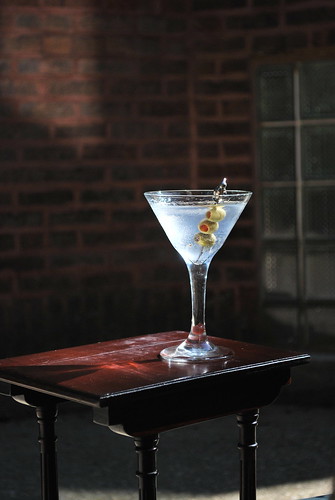
{Photo by rocketlass.}

One of my many sure-to-be-unfulfilled ambitions is to edit an anthology of literature's great hangover scenes. The centerpiece would of course be Lucky Jim, whose recent republication by NYRB Classics is plenty of reason to quote it again:
Dixon was alive again. Consciousness was upon him before he could get out of the way; not for him the slow, gracious wandering from the halls of sleep, but a summary, forcible ejection. He lay sprawled, too wicked to move, spewed up like a broken spider-crab on the tarry shingle of morning. The light did him harm, but not as much as looking at things did; he resolved, having done it once, never to move his eyeballs again. A dusty thudding in his head made the scene before him beat like a pulse. His mouth had been used as a latrine by some small creature of the night, and then as its mausoleum. During the night, too, he'd somehow been on a cross-country run and then been expertly beaten up by secret police. He felt bad.
Good god, that "tarry shingle of morning," the "dusty thudding," the cross-country run. The whole passage trips off the tongue--or would, that is, were the tongue not coated on waking in what seems to be the matted pubic hair of a syphilitic muppet.

Amis also addressed the subject in his book Everyday Drinking:
When that ineffable compound of depression, sadness (these two are not the same), anxiety, self-hatred, sense of failure and fear for the future begins to steal over you, start telling yourself that what you have is a hangover. You are not sickening for anything, you have not suffered a minor brain lesion, you are not all that bad at your job, your family and friends are not leagued in a conspiracy of barely maintained silence about what a shit you are, you have not come at last to see life as it really is, and there is no use crying over spilt milk.
Amis, as you probably know, was something of an expert at both the putting in and the sweating out of the stuff. Cyril Connolly is another who was no stranger to the bottle, and in his sole novel, The Rock Pool, he dealt expertly with its consequences:
Naylor woke late, with a hang-over. It was relatively a new sensation for him, for he was proud of a certain donnish temperance. He would take two whiskies at night and suddenly round on those of his friends who had a third one. Not that he minded, only it seemed rather childish; remember the law of diminishing returns? And why make yourself sick the next day? But strangely enough he was not sick--instead he seemed to be spun up in a kind of voluptuous cocoon. The sun streamed in over the purple bougainvillea. He tottered down to the sea. Lying on his back, the curious sensation was stronger, his stomach seemed made of wool, his throat felt some rich sensual craving, his mind floated among a multitude of sensations, all his senses were slowed up to an unusual delicacy. He masticated a line of Eliot: "The notion of some infinitely tender, infinitely suffering thing." Opening his eyes, the sky and sand were grey as a photograph, his antennae played over the tiny crystals, women's brown legs passed him on the board-walk, but he could not look up. "You see in me a creature in the most refined state of intoxication," he thought, and waves of sensual and lotophagous reminiscence swept over him.
Much as I love the martini, I'll cop to a certain "donnish temperance" myself--one tends to suffice--and I doubt I'm alone in this, our (thank god) more liver-conscious age. In these more temperate times, perhaps it's too much to hope for new entrants to the tippler's TOC?

Fortunately, British novelist Will Wiles has come to the rescue: one of the many great pleasures of his smart, funny, even scabrous new novel Care of Wooden Floors is its splendid rendering of a hangover.

But we'd be doing the memory of Lord Rochester a disservice if we skipped straight to the consequences and neglected the earning of the hangover! First let's get the protagonist--a mostly directionless young Brit who is house-sitting for a particularly particular friend in an eastern European city--drunk. With a friend of said friend who is a musician and (thus?) a committed drinker. Ah, yes, here it comes:
My brain felt thick with scabs, old and new. It was full of wine, it rotated, looked close to spilling.
And that's before they even get to the strip club:
The tide of alcohol was coming back in, dissolving these arguments, mushing them into short-circuiting feedback loops, eating away at ethics, at second thoughts, at broader contexts, at tomorrows and consequences. Amber bumped and ground, and the drink revealed a simple formula on the smeared palimpsest of my mind: seek pleasure. . . . The beer was not helping me as I thought it had been--it had been lying to me. I thought of fermentation, of yeast, of gases, of microbial processes. The wine churned, and came close to spilling.
If only he'd been drinking in Springfield, Homer could have told him that the beer was lying.


And it does spill. Oh, does it spill. But he at least makes it back home, somehow, only to be greeted by the morning:
White noise. Indistinct sound, beneath hearing, the growl and whoosh of blood forcing through tight passages. A two-part beat, the slave-driver's padded drumsticks rising and falling as an exhausted muscle trereme heaves across a treacle ocean. A heart, pumping hot, thick goo in place of blood. Cells striving and dying. The electricity of the brain whining like an insectocutor. A cascade of neural sparks, an ascending, crackling chain reaction, synapses firing. Sensation--the sensation of no sensation. Then, awareness.

A cosmos of pain, discomfort, sickness, and weakness. I was awake. At first, everything seemed to be pain, but this was an illusion brought on by apparent damage to the sensory apparatus. The brain. The brain hurt. It was a sinkhole of pain, dragging all other senses in. Each beat of the drum, each stroke of the oars, simply scooped more sensation towards that pulsing black point of hurt. My heart was going to give up and get sucked into my head, it would explode, and I would die in bed.

In bed. So I was in bed. I realised that this was a good sign.
Or, as Withnail once put it, "I feel like a pig shat in my head." The growing awareness of the extent of his pain continues for three more extravagant pages. "Committees of investigation" are formed to determine that, yes, he is merely hungover. But oh, that merely:
My body was made from wads of soggy material inexpertly lashed together with stringy sinews. The wads composed of the worst stuff possible--bad milk, wine turned to vinegar, chewed gum, earwax, the black crud that accrues on the bottom of computer mice.
The whole scene is the work of a writer having fun with words, and it definitely earns Wiles a place in my chimerical anthology.

And with that, I'll pour the night's lone martini and settle in at the piano to play some Johnny Mercer. Now there was a man who could put it away.

Wednesday, August 27, 2008

Cyril Connolly and the "faintly Mephistopholean Jack Kahane"

I can't resist following up Monday night's discussion of Cyril Connolly's The Rock Pool with two additional points of incidental interest, drawn largely from the pages of Jeremy Lewis's Cyril Connolly: A Life (1997).

1 Connolly's initial efforts to find a publisher for The Rock Pool were stymied by the houses' squeamishness about its perceived obscenity. Though it's difficult now to fathom how the novel--which stoops no lower than a lot of drunkenness and the occasional frank use of the word "lesbian"--could be considered obscene, recent obscenity prosecutions had made publishers reticent. Multiple houses, including Faber and Faber and possibly the Woolfs' Hogarth Press, declined to publish the book, leading Connolly to consider chucking the whole project, as he explains in his introductory letter to his friend Peter Quennell:
I know there is a theory that a book, if it is any good, will always find a publisher, that talent cannot be stifled, that it even proves itself by thriving on disappointment, but I have never subscribed to it: we do not expect spring flowers to bloom in a black frost, and I think the chill wind that blows from English publishers, with their black suits and thin umbrellas, and their habit of beginning every sentence with "We are afraid," has nipped off more promising buds than it has strengthened.
Fortunately for us Connolly fans, English expatriate Jack Kahane came to the rescue, offering to publish the book under his Paris-based Obelisk Press imprint. Kahane, who enjoyed flouting English convention, was known among the cogniscenti for his publication of standard-bearers of obscenity Henry Miller, Anais Nin, and Lawrence Durrell; according to Jeremy Lewis, Kahane
seemed to Alfred Perles the quintessential Englishman, sprucely turned out in a grey business suit with a carnation in his buttonhole, enjoying a bottle of Bass for lunch, and suffering from the occasional "touch of halitosis"; he liked to live well-at one stage he owned seven bulldogs and fifty pairs of trousers.
Kahane admired the book, but he was known to later say, only half-facetiously, that the relative tameness of Connolly's novel was a disgrace to his list.

In the United States, meanwhile, The Rock Pool was published by Scribner's, who sold 300 copies.

2 Though the novel's protagonist, Naylor, clearly serves at least part of the time as a mouthpiece for his creator, he also was based at least in part on an acquaintance of Connolly named Nigel Richards. Jeremy Lewis's note offering more detail about Richards made me gasp--it could have come straight from the more brutal precincts of a Waugh novel:
He abandoned stockbroking to become a tea-planter in Burma, where his first wife, an alcoholoic, fell overboard into a crocodile-infested river, and was eaten (or, as Norman Douglas used to cry, "The crocs got her!"). Some time after publication of The Rock Pool, Connolly and [his wife] Jean were having a drink in the Cafe Royal with Betty Fletcher-Mossop and Robin McDouall, the source of the above information, when Nigel Richards unexpectedly walked in: Connolly was, apparently, overcome with embarrassment, and blurted out "My God, I thought you were dead!" Nigel Richards later married Betty Fletcher-Mossop.
As my friend Marc says, why does anyone bother to make anything up, when real life is always providing more than we can ever use?

Monday, August 25, 2008

"However wise we are, we are only worldly wise for others."

Though he wrote extensively and astutely on novelists major and minor throughout his life, Cyril Connolly himself produced only one novel, The Rock Pool (1936), a brief satire of life among a community of expatriate bohemians and ne'er-do-wells on the Mediterranean coast. As he was wont to do in all aspects of life, Connolly made some effort at preempting the criticism he anticipated of the novel, explaining in his introductory letter to the book, addressed to his friend Peter Quennell,
If one has criticized novels for several years one is supposed to have profited from them. Actually one finds one's mind irremediably silted up with every trick and cliche, every still-born phrase and facile and second-hand expression that one has deplored in others. The easy trade of reviewing is found to have carried banality with it to the point of an occupational disease.
Connolly's worry is misguided: the language of The Rock Pool is far too careful to fall into cliche, though at the same time it is less animated than that of his critical writing. A more accurate, if too harsh, critical account is given by Jeremy Lewis in his biography of Connolly:
None of the characters comes alive; the dialogue is as stiff and awkward and unconvincing as that of a group of incompatible strangers, reluctantly introduced to one another and unlikely to take things any further; there is no sense of drama or involvement or interaction between its wooden-seeming puppets, and its ostensibly shocking subject-matter--bohemian life in the South of France, with its obligatory dashes of sex, drugs, drink and general dissipation--seems irremediably tame, lacking even the faintest whiff of brimstone or depravity.
At its best, The Rock Pool's jaded, brutal humor rivals that of the early comic novels of Anthony Powell or Evelyn Waugh, who ruthlessly stripped those books of any hint of sentiment or lyricism, leaving only terse, Hemingway-esque prose and a slashing, cynical wit. Connolly, however, never seems fully comfortable in that mode, alternating awkwardly between that sort of genuinely funny passage and the more lyrical, sentimental, melancholy, and self-lacerating effusions that make The Unquiet Grave and Enemies of Promise so intimate and compelling. Those interludes do deliver the occasional gem--
I shall cultivate obscurity and practise failure, so repulsive in others, in oneself of course the only dignified thing.

[T]he habit and profession of cynicism can often exist without the requisite gold reserves of emotion to back them.
--but they draw attention to the fact that the book is neither emotionally involving enough to be a straight novel nor spare and biting enough to be a first-rate satire. It's a tough no-man's-land to attempt to hold--Dawn Powell did it, but Connolly can't quite pull it off. You can sense the difficulty he had in the writing, can instantly apprehend why, in Quennell's words, this "aesthetic idealist and . . . literary perfectionist" never wrote another novel.

Despite that, The Rock Pool is often a pleasure to read, offering some wonderfully deadpan dialogue. I particularly liked the fresh strangeness of this exchange:
At the main road Toni turned round. "You must walk back with me to my room, Rascasse--because--because--"

"Because what?"

"Because I am afraid of a ghost there."

"What kind of ghost?"

"Oh, well--she is a woman with very red hair, very cold, sometimes she is thin and sometimes she is fat. She comes very close and goes away at the same time like a pendule. She is the ghost of a mountain in Finland and she wants me to go back because I promised never to leave her."

The midnight bus from Nice could not have arrived more opportunely.
Later, Naylor chats up a drunk German blonde named Sonia:
"Ich bin so mude, so mude," she sighed and went on in labored English. "It is terrible. I get so easily drunk. Let us talk philosophy. What is your philosophy?"

"Opportunism."

"What is that?

"Making the most of my chances."

"Pah--how material."

"Well, why not?"

"But you are young. Later you can be material--now is the time to believe."

"But I do believe--I believe in opportunism."

"How silly--what about life--what is life--what is progress--what is growth?"

"But I do believe in growth and progress. I believe that one is young, then not so young, then old, then very old, then dead; timid, then bold, then cautious, then crusty, then feeble; fresh, then stale; innocent, then guilty, then totally indifferent; first generous and then mean; thin then fat; thoughtless then selfish; hairy then bald--what more can you want?"
Later, Naylor learns more about Sonia from Rascasse, a painter friend, who explains:
"I'm just a little bit in love with her."

"Is she in love with you?"

"No, but she's sorry for me, because she's a virgin and so she tries to make it up to me."

"Well, that's something."

"Yes, but she's sorry for the colonial too, because he takes her everywhere in his car."

"He finds her a virgin as well?"
Connolly also presents a couple of splendid descriptions of hangovers:
Naylor woke late, with a hang-over. It was relatively a new sensation for him, for he was proud of a certain donnish temperance. He would take two whiskies at night and suddenly round on those of his friends who had a third one. Not that he minded, only it seemed rather childish; remember the law of diminishing returns? And why make yourself sick the next day? But strangely enough he was not sick--instead he seemed to be spun up in a kind of voluptuous cocoon. The sun streamed in over the purple bougainvillea. He tottered down to the sea. Lying on his back, the curious sensation was stronger, his stomach seemed made of wool, his throat felt some rich sensual craving, his mind floated among a multitude of sensations, all his senses were slowed up to an unusual delicacy. He masticated a line of Eliot: "The notion of some infinitely tender, infinitely suffering thing." Opening his eyes, the sky and sand were grey as a photograph, his antennae played over the tiny crystals, women's brown legs passed him on the board-walk, but he could not look up. "You see in me a creature in the most refined state of intoxication," he thought, and waves of sensual and lotophagous reminiscence swept over him.
That time, one gets the sense that Naylor had the good fortune to still have some alcohol in his system when he woke, thus avoiding the worst of drink's punishment; on another day, he's not so lucky:
This time he woke up with the real thing. Somebody was tapping his skull as if it were a breakfast egg. When he moved loose flints rattled inside it. His mouth seemed full of corrosive sublimate. He had a breath like an old tyre on a smoking dump. . . . Naylor closed his eyes, opened them, and was sick. For some time after he lay like a crushed snail on a garden path.
Connolly was probably right to decide that his gifts lay in criticism rather than in fiction, but anyone whose writing on hangovers deserves to be mentioned in the same boozy breath as Kingsley Amis's has accomplished something to be proud of; if Connolly were still with us, I'd gladly stand him drink after drink on the strength of those paragraphs alone.