Showing posts with label Some Buried Caesar. Show all posts

Saturday, March 28, 2009

A Saturday miscellany


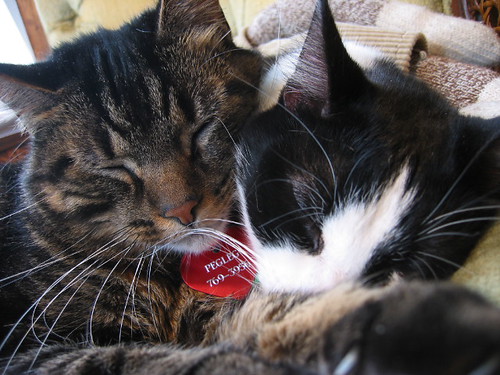
{Photos by rocketlass.}

Some reading notes for your Saturday, held together, as you'll see, by the slimmest of threads:

1 As longtime readers of this blog know, I'm fascinated by the topic of dreams. So I've been paying particular attention to Shelley's dreams as I've been reading Richard Holmes's biography of the poet this past week. Shelley was a troubled sleeper from childhood, prone to sleepwalking and vivid dreams--and quite possibly, depending which of his friends you believe, waking visions--that fueled his poetic embrace of the ghostly and the macabre. At one point in the biography, Holmes quotes a passage from an account by Shelley's cousin Tom Medwin that reads like a cross between Borges and the Arabian Nights:
At this time Shelley was ever in a dreamy state, and he told me he was in the habit of noting down his dreams. The first day he said, they amounted to a page, the next to two, the third to several, till at last they constituted the greater part of his existence.
While the thought of the writing of a dream journal consuming one's life is scary enough, after that the account moves into the positively uncanny:
One morning he told me he was satisfied of the existence of two sorts of dreams, the Phrenic and the Psychic; and that he had witnessed a singular phenomenon, proving that the mind and soul were separate and different entities--that it had more than once happened to him to have a dream, which the mind was pleasantly and actively developing; in the midst of which, it was broken off by a dream within a dream--a dream of the soul, to which the mind was not privy; but that from the effect it produced--the start of horror with which he waked--must have been terrific.
2 Which leads me to a dream I had last week: I was in a boat, possibly a police launch, cruising purposefully up the East River on a chilly night. We were looking for a body . . . and Nero Wolfe was with us. I think that's how I realized that it was a dream: no force on earth, I told myself, could get Nero Wolfe to leave his townhouse and board a boat for a wintry nighttime cruise up the East River. That said, I bet he would have found what we were looking for had I only stayed asleep a little longer.

3 Speaking of Nero Wolfe, he tosses off a line in Some Buried Caesar that's been lingering in my mind since I read the novel a couple of weeks ago. Dismissing some complaints about a ruse he'd employed, he says,
Victor Hugo wrote a whole book to prove that a lie could be sublime.
I'm far from a Hugo expert, and a tiny bit of research didn't turn up any obvious answers, so I put the question to the audience: what book is Wolfe talking about?

4 Though I've only lost about half a dozen books in my life, strangely enough two of them were Victor Hugo novels: back in high school, I had mass market paperbacks of Les Miserables and The Hunchback of Notre Dame, and both of them disappeared when I was partway through them. Perhaps one of my classmates was a secret Hugo fan?

I've thus never finished either one, though I'll admit that my enjoyment of ridiculously long books has led me to eye Les Miserables at the bookstore on occasion--I'm willing to listen to arguments on its behalf if anyone has any to offer.

5 Finally, on the topic of books I've never finished: nearly four years ago I read about four hundred pages of The Count of Monte Cristo while on a weekend road trip. I was surprised to find that nearly everything I knew about the novel--the frame-up, the imprisonment, the escape--happened in the first three hundred or so of those pages, which were great fun, on par with the best parts of The Three Musketeers. But the next hundred pages proved a bit of a slog: where I was expecting the Count to instantly and implacably begin wreaking vengeance, instead he embarked on a series of improbable picaresque adventures. So I put the book away, unsure that I had the patience for another nine hundred pages of such swashbuckling.

So, I ask any Monte Cristo fans out there: was I wrong? Should I take up the Count's story once more?

6 Now that I think about it, this list comes distressingly close to being a perfect example of how my mind works: I may not be a social butterfly, but I plead guilty to being a mental one.

Thursday, March 12, 2009

"I was reflecting that of all Wolfe's thousand techniques for making himself obnoxious the worst was when he thought he was being funny."

After reading a novel about Nazis, however, well-written it might be, a retreat to novelistic comfort food seems essential. And what better comfort than that offered by Rex Stout, who, following my recent discovery of the pleasures afforded by his Nero Wolfe novels, offers me a near-Wodehousian quantity of books to enjoy?

The mention of Wodehouse is anything but accidental, as Stout's novels in their tight plots and attention to slanguage resemble nothing so much as what one would imagine Wodehouse himself might have turned out had he devoted himself to mysteries rather than the troubles of privileged kittenheads. Not that Stout's language reaches the brilliance of Wodehouse--to be honest, it's hard to think of anyone who matches Wodehouse when he's at his best. But Stout at least earns the comparison, both for the off-the-cuff beauty of Archie Goodwin's vocabulary and for the Blandings Castle-like sense that, much as the trappings of life may change, in essence Archie and Wolfe remain forever in Depression-era New York, their townhouse a fiercely held redoubt against modern existence.

So I turned to a recently published two-fer, which comprises Some Buried Caesar (1938) and The Golden Spiders (1953), and I was far from disappointed. Both offer circumstances that are unusual for Wolfe: he spends the entirety of the former not only outside his beloved 35th Street townhouse, but, god forbid, in rural New York, while the latter sees the case at its heart opened by, of all things, a child. Yet (and this is one of the keys to the appeal of the Wolfe novels) Wolfe himself is essentially the same no matter the circumstances: certain and secretive, imperial and imperious, finicky and forbidding. His unchanging, self-involved nature offers many of the same pleasures as his model, Sherlock Holmes--but, crucially, Wolfe, for all his peculiarities and sensitivities, suggests nothing of the strange neediness or even hard-fought weakness that occasionally flicker around the edges of Holmes's personality. Wolfe will never need us or our mysteries--but if we need him, we can rely on Nero Wolfe completely. If, that is, we can put up with him.

To aid us in that mission, we have, as ever, Archie Goodwin, whose Bertie Woosterian vocabulary serves as an excellent distraction from his Jeevesian competence. If Archie can tolerate Wolfe, then surely so can we. He serves as our eyes and our sounding board, testing theories and attempting to interpret Wolfe's monumental self-confidence. Without Archie, these books could easily have been little but puzzle mysteries, chances to test our wits against Wolfe's complicated plans and cryptic pronouncements; Archie's constant attention to character and motive are a large part of what enlarges them so that they become something more, a sort of compromise among Conan Doyle, S. S. Van Dine, and the noir masters whom Stout's work is, by design, too light to openly acknowledge.

And then there's Archie's language, which is a treat in and of itself. Whether he's describing how out of place a dandyish thug looks on a country ranch--
[T]he proper environment for that type is bounded by 42nd and 96th Streets on the south and north, and Lexington Avenue and Broadway on the east and west. In their habitat they don't look bad, in fact they help a lot in maintaining the tone, but out in the country like that, still wearing a Crawnley town suit including vest and a custom-made shirt and a Monteith tie, they jar.
--or being pleasantly surprised by the secretary at a highbrow magazine--
Having on Sunday bought a copy of the magazine that Vincent Lipscomb edited, and looked through it before passing it to Wolfe, I had supposed that any female employed by it would have all her points of interest, if any, inside her skull; but a curvy little number with dancing eyes, seated at a switchboard, gave me one bright glance and then welcomed me with a smile which indicated that the only reason she had taken the job was that she thought I would show up someday.
--or dismissing an unctuous PR flack--
In size he had been shortchanged, the top of his head being about level with the tip of my nose. With his thin brown mustache trimmed so it wasn't quite parallel with the thick lips of his wide mouth, I wouldn't have called him well designed to make the sort of impression desirable for a handler of public relations, but I admit I'm prejudiced about a mustache trying to pass as a plucked eyebrow.
--or just describing his own movements--
The basement floor was concrete. I navigated it, now as silently as silence.
--Goodwin's running monologue is idiosyncratic, worldly, goofily self-regarding, and, most important, great fun. He's wonderful company.

Now to read the remaining sixty-nine Nero Wolfe novels. After all, if I don't do that, how will I know whether Stout ever came up with a better closing line that the one that ends The Golden Spiders? It's damn hard to top "What the hell," you've gotta admit.