Showing posts with label Robert Arthur. Show all posts

Friday, February 27, 2009

"Everything has to come to an end sometime, even pure unadulterated terror--particularly if there is nothing whatever to be done about it."


{Photo by rocketlass.}

This week's New Yorker features a "Talk of the Town" piece about the producers of a new staging of Noël Coward's Blithe Spirit asking a group of working mediums to attempt to conjure the spirit of Coward himself as part of an audition for a job as advisor to the actress portraying the medium in the play. The piece reminded me of an odd story I read this fall, when, deep into my annual autumnal ghost story binge, I took James Hynes's advice and bought an old copy of yet another of those Robert Arthur-edited Hitchcock anthologies, Stories for Late at Night (1961). The volume is the usual mixed but very satisfying bag, its handful of truly chilling stories–Jerome Bixby's "It's a Good Life" and John Collier's "Evening Primrose" among them–more than justifying the minimal cost of a used copy.

The story that returned to mind today was "Lady's Man" (1961), by early film actress and novelist Ruth Chatterton, which, from the point of view of Chatterton herself, relates a ghostly encounter that she had at Noel Coward's country house, Goldenhurst. In the story, Chatterton is invited to Goldenhurst for a weekend visit with a few others of Coward's circle, including his longtime close friend Joyce Carey; put up in a first-floor room that she's never seen used as guest quarters before, she senses a male presence enter her room late in the night:
I shut my eyes but they wouldn't stay shut. Even though I tried not to look, they kept wandering to that inky vaccum beyond the wide-open door. That was when the noise began, or when I became aware of it. Tap-tap-tap, as if a fingernail were tapping on the glass of the pictures on the wall, one after the other. Then the floorboards began to creak. Someone seemed to be pacing back and forth beside my bed. I could hear it plainly.
What's most striking about the story is that, rather than a piece of fiction crafted to thrill the readers of Hitchcock's Mystery Magazine or Astounding Science Fiction, "Lady's Man" appears to be a straight-up ghost story. Though it builds to a delicious concluding line, it nevertheless has all the unaffected appeal of a ghost story recounted to a friend over October campfire drinks, its simple chronology and incidental details giving it the casual verisimilitude crucial to such tales–it's the sort of story that, if told by a trusted friend, one would have to file in the "I don't believe in ghosts, but . . . " drawer. In the midst of stories with steel-trap plots and inexorably building tension, it's a breath of fresh–if undeniably creepy–air.

Chatterton died later that same year, 1961, and my relatively cursory searching turns up no other mention of this encounter. Philip Hoare's 1998 biography of Coward, however, does mention hauntings at Goldenhurst, though in a different, newer room:
Here guests–who had included Maugham just a few months before–reported odder events. Lilia Ralli, the Greek-born friend of the Duchess of Kent, had a restless night in the French Room, a new guest room built off the long passage. Coward came to the conclusion, based on other disturbed nights, that local tales of a suicide walking the path over which the room had been built were true and that it was haunted by a lovelorn Kentish lad.
Hoare, understandably, can't resist adding in a footnote:
Subsequent tenants of the house describe a feeling of being watched when playing the piano, which they ascribe to Coward's continuing presence. His ghost has also been reported in more unlikely venues: the bar manager of the Little Theatre in Wells claimed to have seen his spectral form, clad in a smoking jacket during an amateur production of Cowardy Custard.
To return to the "Talk of the Town" piece (in which one of the producers says that the most effective of the mediums, "scared the shit out of me"): I wonder whether the producers' desire for additional coaching for their medium was a result of their having read last year's fascinating collection of Coward's letters, in which he registers vigorous disapproval of the actress who originated the role in the first London run of Blithe Spirit:
The great disappointment is Margaret Rutherford, whom the audience love, because the part is so good, but who is actually very, very bad indeed. She is indistinct, fussy and, beyond her personality, has no technical knowledge or resources at all. She merely fumbles and gasps and drops things and throws many of my best lines down the drain. She is despair to Fay, Cecil and Kay and mortification to me because I thought she would be marvelous. I need hardly say she got a magnificent notice. So much for that.
If a producer wants to avoid being haunted by Coward, perhaps it's worth taking a little extra effort over the medium?

Thursday, February 19, 2009

"Perhaps . . . a message comes to the birds in autumn, like a warning."


Aside from John Bellairs, I don't think any writer cost me more childhood sleep than Robert Arthur. Arthur wrote ghost stories and mysteries, as well as episodes of the suspense radio drama "The Mysterious Traveler," but it wasn't his own works, good as they were, that kept me up at night. Rather, it was his work as a unnamed editor of a legion of Alfred Hitchcock anthologies from the 1950s and '60s--especially a series of anthologies aimed at young readers that were republished in the early 1980s. Through those volumes I made acquaintance with any number of writers whose works I've continued to enjoy through the years, including Lord Dunsany, Agatha Christie, E. F. Benson, Eric Ambler, Shirley Jackson, Robert Bloch, Dorothy L. Sayers, and Ray Bradbury.

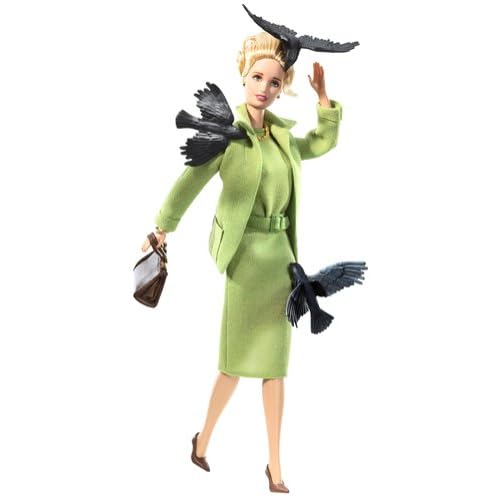
But the story that affected me the most, read first when I was about ten and turned to again and again over the next several years, was Daphne du Maurier's "The Birds." Long before I saw the movie--which, when I did finally watch it, disappointed me greatly--I read and re-read "The Birds," to the point where I knew large stretches of it by heart.

Why did I fixate on this story, of all the stories in the volumes, many of which were far more blatantly creepy or surprising? I think it's likely that I was responding to rural isolation of the Cornish farming community that du Maurier portrays so well, the sense that, when nature unexpectedly--and inexplicably--turns against farmhand Nat Hocken and his family, they have little to fall back on but themselves. Though the rural landscape in which I grew up possessed none of the dramatic wildness of the Cornish seascape of du Maurier's story, there was always a similar sense, even in the age of television, that we were at the edge of the world, far from the important dealings and decisions of big cities. So while there was much in the story I didn't even understand--I remember struggling with "pension," "council houses," and even "wireless" when I first read it--I instantly grasped the terror of feeling cut off from the world, and not having a reason to expect anything resembling rescue to come over the horizon.

And then there's du Maurier's relentless return to the physical, her foregrounding of sensation over theme or speculation. Though I was asked to do very little work on the farm as a boy (my father's memories of having to do too much work on the farm at that age having convinced him to shield us to some extent), I knew the bone-penetrating cold that could overtake you in a field in the bitterness of spring, which gave the opening of a passage like this a familiarity and force that then naturally carried over to its more gruesome aspects:
When he reached the beach below the headland he could scarcely stand, the force of the east wind was so strong. It hurt to draw breath, and his bare hands were blue. Never had he known such cold, not in all the bad winters he could remember. It was low tide. He crunched his way over the shingle to the softer sand and then, his back to the wind, ground a pit in the sand with his heel. He meant to drop the birds into it, but as he opened up the sack the force of the wind carried them, lifted them, as though in flight again, and they were blown away from him along the beach, tossed like feathers, spread and scattered, the bodies of the fifty frozen birds. There was something ugly in the sight. He did not like it. The dead birds were swept away from him by the wind.
Which suggests another reason this story stayed with me: death in "The Birds," whether avian or human, is concrete and horrible. It takes something beautiful and right--a living, moving, even graceful creature--and it replaces it with a broken thing, a perversion, an object of horror. It is irreversible, and, as the tension mounts, page by page, it seems increasingly inevitable. To a child, that knowledge is as chilling as anything. I read the story again and again, knowing the bleak ending would never change.

I recently reread "The Birds" for the first time in years, possibly even decades, in the new collection of du Maurier's short stories from the New York Review of Books, Don't Look Now (2008), and was pleased to find its power hasn't diminished. If anything, du Maurier's refusal to provide an explanation, or even to hint at one, impressed me more than it did years ago. And while it's unquestionably the best story in the collection, the whole volume is impressive. "Don't Look Now," on which the Nicholas Roeg film was based, is a tight, creepy suspense tale, while both "Split Second" and "Kiss Me Again, Stranger" reminded me of Muriel Spark's ghost stories. The most inventive story is also the most sadistically chilling: "The Blue Lenses," in which a woman who's just undergone eye surgery wakes to find that everyone has the head of an animal--and her husband's animal head is not one that inspires trust.

Aside from "The Birds," I think the last story in the collection, "Monte Verità," is the one most likely to stay with me. An almost novella-length tale of a pair of friends and the beautiful, ethereal woman they both loved and lost, it is shot through with longing and an almost naive mysticism, a willingness to believe that the hidden places of the world and the bounds of human potential have not necessarily all been mapped. Its sense of interwar rootlessness brings to mind Patrick Leigh Fermor's travel writings, and it is told with an asperity and patience that seem suitable to its remote mountain setting.
They told me afterwards they had found nothing. No trace of anyone, living or dead. Maddened by anger, and, I believe, by fear, they had succeeded at last at breaking into those forbidden walls, dreaded and shunned through countless years--to be met by silence.
Even though it's sitting on my shelf, safely bound, I think of "Monte Verità" as the sort of story you happen across in a magazine and are completely swept away by, your whole afternoon dissolved into its enchanting strangeness. But you fail to note the name of the author, and for years afterward, you mention it to friends here and there, breathlessly relating its seductions, but you never meet with anyone who recognizes it. You begin to doubt your own memory . . and then one day in a used bookshop, you pick up a musty anthology--maybe even a Hitchock anthology edited by Robert Arthur--and there it is, a treasure returned. A life of bookstore browsing offers few better moments.


{Photo by rocketlass.}

Thursday, October 30, 2008

Mere coincidence . . . or eerie coincidence?


{Photo by rocketlass.}

You might want to dim your lights for this one. Maybe open the window a crack to let in the October chill. Pull the blanket a bit closer, warm your brandy, put another log on the fire, that sort of thing. Are you sure you threw the deadbolt?

Monday, as I was reading James Boswell's Life of Johnson, I encountered this bit of doggerel from, as Boswell terms him, "the very ingenious Mr. Didben":
A Matrimonial Thought

In the blithe days of honey-moon,
With Kate's allurements smitten,
I lov'd her late, I lov'd her soon,
And call'd her dearest kitten.

But now my kitten's grown a cat,
And cross like other wives,
O! by my soul, my honest Mat,
I fear she has nine lives.
My first thought on reading that (other than to think how glad I was not to be Mr. Didben's poor wife) was that it sounded like the kernel of a story that John Collier might cook up in conjunction with Robert Arthur. A harridan of a wife who drives her husband to murder . . . but then he finds he has to murder her again and again and again--seems like just their kind of story.

Two days later, I received in the mail an old copy of Alfred Hitchcock Presents Stories for Late at Night (1961), which I'd ordered following James Hynes's enthusiastic recommendation at his blog. Though I'd known that Robert Arthur had served as editor for the great anthologies aimed at children that were published under Hitchcock's name in the 1960s (and that I read multiple times when I was kid in the '80s), it hadn't occurred to me that he'd probably played the same role in the creation of the adult Hitchcock anthologies of the period as well. But on opening this volume, I encountered the following note, which I think one wouldn't be faulted for assuming understates the case:
The editor gratefully acknowledges the invaluable assistance of Robert Arthur in the preparation of this volume.
If Arthur didn't get quite the credit he most likely ought to have for his editorial work on Stories for Late at Night, it was made up for by the placement of his own story "Death Is a Dream" at the opening of the collection.

Which brings us back around to our starting point, the wife with nine lives: "Death Is a Dream" is about a man whose wife returns from the grave . . . so he kills her . . . but then has to kill her yet again! "I fear she has nine lives," indeed.

What was that? You say you heard something? A sound at the window? Oh, I'm sure it was nothing. Nothing at all. . . . After all, who on earth would be out there on this blustery October night?